


When it comes to bathroom fitting it seems the homemade goods are the best ones, with new research finding British tradespeople to believe UK goods are far more reliable than those produced abroad.

The research, which comes from online bathroom retailer UKBathrooms.com, looked at 1,012 tradespeople from all of the UK who work with bathroom fixtures and fittings in order to gauge opinion. With a total of 47% agreeing that British made products are superior, it seems the majority of fitters are opting to buy from UK manufacturers wherever they can.

Questions asked for the research included:

  • "Do you take into account where a product is manufactured before buying?" 62% believed this to important, while the rest didn't seem to care as long as it did the job.

  • "Which manufacturing country do you believe produces the most reliable bathroom fittings/products?" This was posed to all that had answered yes to the previous question, with Britain coming out on top with the aforementioned statistic. Coming in second were Chinese made products with 19%, while Germany took the third place spot with 16%

  • "Do you regularly purchase British made bathroom fittings?" With 67% answering 'yes' to this. When asked why, reliability was the most common reason with 57% explaining that British made products tended to have better longevity. 35% also cited that support was much better, as any problems with UK items could be easily fixed. 24% even said they simply preferred the "design and style" of the home products!

  • Finally, respondents were asked "Do you think it's important for tradespeople to support British made products?" 52% believed it is indeed important, with 61% agreeing that the UK industry needed their support. 40% also said that they do so to keep Britain's bathroom manufacturing industry in good demand.

UKBathrooms.com director Peter Gregg commented that he was pleased to know UK-based bathroom manufacturers are "held in such high esteem amongst tradespersons". He then went on to discuss the benefits the company has seen in using them itself - a higher level of quality control, easier to source and shorter lead times than buying from production lines in the Far East.

He concluded by saying: "The manufacturing industry’s love affair with the market in the Far East has taken a knock over the last few years as more and more suppliers are looking at the possibility of a return to the UK. Tradespersons being supportive of UK manufacturing can only be a good thing to those looking at the possibility of coming back to Britain."

Fancy learning all about bathroom installations and having a go at it yourself, with the aim to even turn professional? If you're looking for a more active line of work, Access Training Academies offer high quality bathroom fitting training courses that will give you the skills and qualifications to make that a reality. At the end you'll also have the perfect grounding to continue on to more advanced plumbing training should you so wish. Give us a call on 0800 345 7492 and our course advisers will be happy to tell you more. Don't delay and book your place today!

An ex All-Black and Cardiff Blues captain, former rugby player Xavier Rush is currently training here at Access Training after retiring from sports and deciding to earn the qualifications to start a new career in property development. After completing an intenstive kitchen fitting course, he has decided to continue his training and earn additional qualifications in electrics and plumbing. We caught up with him again as he progressed through the professional electrician's course to see how he's getting on with starting his new life...

Xavier Rush hard at workSo how has your electrical training been going so far?

Busy, very busy! But good – I’ve been doing my Part P and 17th Edition, had an exam yesterday which I passed so I’m very happy about that. I wasn’t looking forward to doing a resit on Friday so I’m glad I’ve managed to avoid that. But it’s an intense course this one, and you don’t have much time to muck around. It’s intense, but its short and you get a lot of information which is great.

How have you found the balance between theory and practical learning?

You’re getting a good mix of both here. I think Martin [One of the electrical tutors] teaches it very well. I’ve enjoyed his style and the environment of working with all the other students as well. We come from all walks of life and backgrounds, but we’ve all got that one common goal of getting our qualifications. And we’re all here to learn, it’s very different to school – everyone’s here because they want to be here.

How has the electrical course compared to the kitchen fitting you were doing previously?

Kitchen fitting and carpentry is a lot more hands-on, which I’m more used to. The electrics is where you have to get the old brain working in gear. It’s been a while since I’ve had to sit in a classroom but again as I said Martin makes it interesting and mixes it up. And that’s helped us all.

Did you find you were fully prepared for the exams?

Well it’s a two and a half/three week course, so you’ve just got to make sure that you keep yourself pretty quiet over these weeks so at the end of it you get the pass mark. The first exam wasn’t bad at all but this one...it was an open book exam with the regs but it can be tricky. Its multiple choice (or multiple guess in some situations!) but I feel we covered it well in our teachings and you’ve just got to know your way around the book really.

We all passed in our class so we must have been fairly well prepared, especially when you never know what they’re going to chuck out at you. Every exam is different from everyone else’s.

So what will you be moving onto next?

I’m doing my PAT testing now, then have a nice week’s break and come back and nail my plumbing. I’m over the moon that I’m now a qualified domestic installer than can self-certify my own work. If you look at apprenticeships when I was finishing school that would have been a seven year course and even at the end you might not know as much as you’re given here. You’d have a fair bit of experience on the job but you’re in a good position to move on now and either do your own work if you feel confident enough or work for someone for a while before that.

Finally, what advice would you give to someone thinking of doing an electrical course or even completely changing careers like you have?

They need to remember that the courses are intense – you learn a lot of information so you want to make sure you go home, you get your sleep, your rest and your revision. Because you are slamming a lot of information into a small amount of time so you want to make sure you take in as much of it as possible. It’s a fun, enjoyable environment to learn in and the tutors. You’re learning from top guys so it’s been well worth the experience.

If you’ve wanted a career and want more of a hands-on trade and a change from what you’ve been doing I definitely recommend it. I certainly wouldn’t be here if I thought it was a waste of time. This is a great environment to come in and start.

We'll be catching up with Xavier Rush again after his week off, so if you have any questions you'd like to ask him please let us know via Twitter or Facebook. If you would like more information on taking the steps to change your career and become a professional tradesperson, please get in contact with one of our course advisers. Access Training offer courses in plumbing, electric, gas and construction (plastering, tiling, carpentry and painting & decoration) and they'd be happy to answer any questions. You can contact them on 088 345 7492.

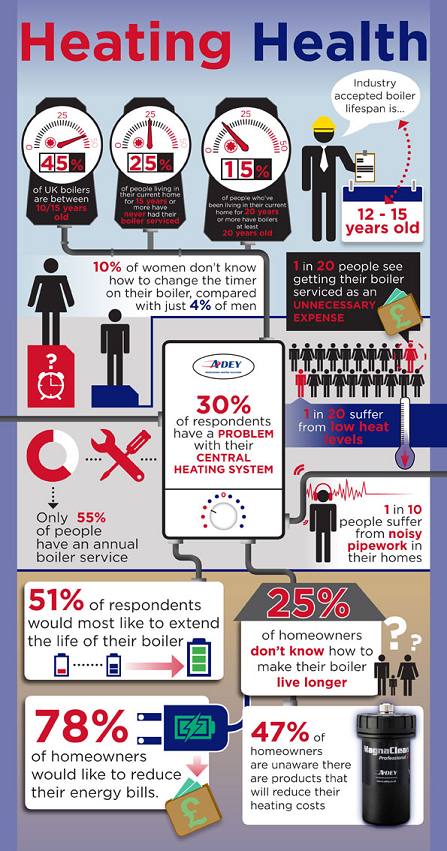
According to new research commissioned by ADEY Professional Heating Solutions, installers and heating engineers might have a huge opportunity at their fingertips.

It seems that millions of homeowners across the UK are failing to maintain their central heating systems properly, resulting in not only a loss of efficiency but a reduced lifespan and an increase in the amount of energy needed to heat homes. Their research looked at more than 1300 homeowners across the UK, with only 55% of them confirming that they have their boiler serviced annually. One in 20 even said that they considered it an unneccesary expense!

ADEY also found that 45% of homeowners claim to have a boiler between 10 and 15 years old, with 25% who have lived in their current home for more than 15 years saying that they have never once had their boiler serviced. Furthermore, almost a third (30%) of homeowners have a problem with their central heating system, with one in 20 suffering from low heat levels. One in 10 people put up with noisy pipework in their homes – a common indicator of debris in the heating system – and 15% of people admitted they turn the thermostat up to try to fix their boiler, burning more fuel than necessary on a healthy heating system.

Consumer/environmental broadcaster Lucy Siegle said: "Boilers are the 'forgotten workhorses' of our homes. We expect them to carry on pumping away without any TLC, but homeowners need to understand that a well-maintained system costs less to run. This is where installers have a great opportunity to use their insider knowledge and help their customers counter rising energy bills by ensuring their heating systems work safely and efficiently."

ADEY’s commercial director Rebekah Howard added: "The results of our research suggest that many people don’t understand the benefits that having an annual boiler service will bring, and worryingly, just let their good old boiler in the corner keep chugging away without giving it any attention.

"The current climate presents installers with a timely opportunity to be telling customers how a well-maintained and efficient boiler can help save money on heating bills, reduce the risk of it breaking down when it’s cranked up to keep them warm, and ensure it’s safe to use. Installers can be assured that many of their customers will welcome this advice, as three quarters of homeowners surveyed wanted to know about the simple changes they can make to the central heating to reduce energy bills."

More findings from the search can be seen in the infographic below:

Via HVP Magazine

------

By becoming a qualified heating engineer, you too will be able to seize this opportunity for work. Not only that, but the life of a qualified plumber/engineer is varied, challenging and pays extremely well. You'll find yourself not only with a skill you'll have for the rest of your life, but a career that's never short of new work. But before any of this can happen, you'll need that right training and qualifications. Offering plumbing and gas engineer courses as both separate and combined packages, Access Training Academies is dedicated to helping students attain their goal of becoming professionally qualified, taking those first steps toward a brand new career. To find out more about how our courses can help you, contact one of our course advisers on 0800 345 7492 and book your place today!

Can I Do My Own Electrical Work?

Napoleon once referred to Britain as 'a nation of shopkeepers'. Probably not true in modern society, but we are still certainly a nation of something - do-it-yourselfers!

More and more people are willing to have a go at things they may have once thought impossible, taking regular visits to the local DIY shop to get parts for little jobs here and there or even working toward bigger projects such as renovating a room or building a conservatory. As DIY work becomes more popular, it raises the question: can you do your own electrical work at home? 

At Access Training, we would say when it comes to plumbing, gas and electrical jobs, such concerns are better left to the professionals!

Can I Do DIY Electrical Work?

A homeowner can legally undertake basic electrical jobs themselves, such as installing an additional socket/light or connecting a cooker to an existing connection unit, but not much more than that. Anything more complicated like installing a new shower circuit or a new cooker circuit, is considered "notifiable work" and legally requires a Part P qualified electrician.

If you have any DIY plans that require electrical work, it's always best to check what you are legally able to do before starting.

If you have any doubts on the legality or your capability to do the job safely in the first place, do NOT attempt it yourself and instead seek out the help of a qualified professional. Not only will you be ensuring that the job is done safely and properly, but you'll be saving yourself money in the long run. Hiring an electrician to fix a botched job usually ends up costing more than getting one out to do the job in the first place!

What About Building Regulations?

District councils have responsibility for ensuring that any building works meet the national Building Regulations for efficiency, safety, design and disabled access. Building Regulations must be obtained from the local council before any structural alteration is made to a home. Such regulations are easier to obtain if the homeowner can prove they are going to be using a qualified electrician to undertake the work.

Risks of DIY Electrical Work

It doesn't take much for electricity to kill - the 230 volt domestic supply running through your home is more than enough. Our bodies use electrical signals to control our organs and any excess voltage will interfere with these and can result in death.

Poorly installed electrics can also easily start fires, so by carrying out your own electrical work you could be risking losing your home and all of your possessions, just from some faulty wiring! In addition to this, if your DIY work goes against building regulations, you may find that your property is not insured and the insurance company is not legally obliged to reimburse anything.

On average, around 30 people die each year due to low voltage electrocutions and electrical burns. Plus, two and a half million people will receive a mains voltage electric shock every year, and 350,000 will receive a serious injury. Another 46 will die each year as an indirect result of faulty electrical wiring or the poor installation of electrical equipment - it's just not worth the risk!


Registers

To find an electrical contractor to undertake domestic tasks, the best place to start is often a register such as the Electrical Safety Register at www.electricalsafetyregister.com. Electricians who register with the Electrical Safety Register must meet a very high industry standard, which means that consumers who use an ESR registered contractor are guaranteed an exceptionally high standard of work. In addition, all work carried out by Electrical Safety Register contractors is guaranteed. Any deficiencies in the work carried out are resolved at no extra cost.
 

If you would like to learn more about electrical work and maintenance, you might want to consider one of the many electrical training courses we offer. These are available for both DIY enthusiasts AND people looking to gain the vital qualifications needed to make the career change to become an electrician. 

If you have any questions about our training courses, please don't hesitate to contact us using the button below.

Contact Access Training

PAGE UPDATED 24 FEBRUARY 2025

As a former All Black and Cardiff Blues rugby team captain, 36-year old Xavier Rush is someone sports fans have probably heard of. But after a successful sporting career at both domestic and international levels he’s finally hanging his boots up and moving on to the next stage of his life. Choosing to retrain to become a fully-fledged property developer, he approached Access Training Academies and recently completed our kitchen fitting course. Now he’s moving on toward even more qualifications to expand his trade resume and take on even more work.

We sat down with his to discuss his plans for the future and how he’s finding the change from a ball to a toolkit...

Now that you’ve retired, what’s next for Xavier Rush?

Now that I’ve finished my rugby career I knew I obviously needed to retrain in something. I’ve always enjoyed properties and doing them up so I’ve come here to get as many strings to my bow as possible. The more I can do the less people I’d need to get in for jobs and the less I’d need to pay out.

I first did carpentry when I was 18 and had just left school, but it’s great to have a facility so close to me and the speed at which you can build your skills up. I originally came to do kitchen fitting which I’ve completed, but there’s the Part P electrical component to it too which I’m doing now for the next two and a half weeks. After that I plan to crack on and do six weeks of plumbing as well!

How has the course been so far?

I’ve been really enjoying it and the tutors have been excellent. There’s always some things that you’re better at than others – some of the bends in the plumbing took some time to get my head around. But the more practice you have the better you get at it. You aren’t going to sail through every day – some days are worse than others but you often find once you’ve slept on it, you come back the next day and get it. It’s great to be learning new skills and really refreshing to have a change of career. A lot of people get a bit scared but I’m really looking forward to it – it’s life after rugby for me.

Will you miss the rugby life?

Of course there’s always aspects you will miss – the getting up for a big game like a Heineken Cup match, playing in front of a big crowd. I’ll miss those moments but there’s enough of them in the memory bank to call on every now and then. It’s nice to be on the other side of it now and I’ve thoroughly enjoyed my career. I feel quite fortunate – it was a fairly long career and now I’m more excited about getting things started with my own business. It’s just time to move forward with life.

Look forward to more updates from Xavier Rush, who will be sharing his training experiences with us each week as he works towards his new qualifications. In the meantime if you have any questions you'd like to ask him about turning towards a brand new career, let us know on Twitter or Facebook and we'll pass the best ones onto him.

We could go on and on about why we feel Access Training is the best place to come for your trade qualifications, but our words don't mean anything unless the students we train can attest to the quality we aim to deliver. That's why we're going to start showcasing some of the positive feedback we've received about our range of intensive training courses, so that any of you reading that are on the fence can see that we really are dedicated to giving our candidates the best qualifications and practical trades training available. You can read more of the testimonials we've received in the past here.

After spending several years abroad, Mark Todd came home to kick start his new career on our Intensive Carpentry training course…

After leaving the Royal Marines around four years ago I got into working on maritime security on ships in East Africa. However after about 3 years I wanted to get a career back home, and I’ve always had an interest in carpentry. I’ve done a few little jobs here and there in the past but wanted to take it a bit further and get qualified.

I was originally going to go back to college but obviously that would have taken around two years to do. With Access Academies I’ve been able to come here and do the course in two months which has been so much better. I’ve come out of the course finishing on a Friday, then gone straight into a job the following Monday.

The eight weeks I’ve spent here have been excellent and I’ve really enjoyed my time. The tutors have been absolutely brilliant – I’ve learnt so much from them and they are always ready to give any advice you need. Not just with the work we do here, but if we’ve got anything else going on outside they’ll do the best they can to help which is really good of them to do off of their own backs. It really gets you raring to go – it got to the point in the last week where I just wanted to get out there and start working.

I’m about to start work with two carpenters doing some refurbishment in a nursing home. The work is ongoing, it’s local and I’ll be picking up experience from people who have been in the trade for 20 years each. Right now I still feel the need to carry on my learning. I plan to self-employed eventually but for the next six months to a year I’m just going to try and pick up as much experience as I can so I’ll be fully prepared.

- Mark Todd, Swansea

------

Have you considered stepping into a brand new career and becoming a fully qualified tradesperson? Here at Access Training Academies we offer a full spectrum of trade courses including plumbing, gas, electricity, carpentry, tiling, plastering and painting & decorating. By training with us not only will you enjoy our state-of-the-art facilities and experienced tutors, but also gain exactly what you need for a long and prosperous career. To find out more please get in contact with our course advisers on 0800 345 7492.

We wrote about it back in mid-August, but this week saw the official launch of WaterSafe, the new plumbing assurance scheme to give consumers the peace of mind that they know the plumber they've hired is fully qualified for the work.

Thought the website went live a while ago, the scheme brings together the following seven existing Approved Contractors' Schemes operating in England, Scotland, Wales and Northern Ireland:

  • The Water Industry Approved Plumbers’ Scheme (WIAPS)
  • Association of Plumbing and Heating Contractors (APHC)
  • Chartered Institute of Plumbing and Heating Engineering (CIPHE)
  • Scottish and Northern Ireland Plumbing Employers’ Federation (SNIPEF)
  • Anglian Water’s A Plus
  • Severn Trent’s Watermark
  • Thames Water’s TAPS.

Supported by all key plumbing bodies and water companies in the country, WaterSafe provides an online database and search facility of plumbers, recognising their qualifications and competency. 

To join the scheme, recognised plumbers employed by an approved business on the register will need to have successfully completed an NVQ Level 2 in Mechanical Engineering Services (6089 - Plumbing) and hold a water industry-recognised Water Fittings Regulations qualification. Unlike the Gas Safe register WaterSafe is not a legal requirement, however by joining a nationwide register plumbers will become part of a wider group of professionals that is set to become the biggest search facility for approved plumbers in the UK.

Kevin Wellman, chief executive officer for the Chartered Institute of Plumbing & Heating Engineering (CIPHE) and board member for WaterSafe says: "Following months of planning and investment, we are hugely excited to launch WaterSafe.

"Until now, the plumbing industry has not had the presence of a scheme that encompasses all of the Approved Contractors' Schemes in the UK. As such, it has been very difficult for consumers to make an informed choice when sourcing a credible plumber, struggling to distinguish from the plethora of trade associations, accreditation bodies and trust marks.

"WaterSafe has been designed to negate this confusion. By bringing together these existing schemes under one unique umbrella organisation, WaterSafe offers assurance of a professional, accredited plumber every time. In this way, our aim is to not only promote good plumbing practice and compliance with the Water Fittings Regulations and Byelaws, but also clamp down on the inherent issue of rogue plumbers. WaterSafe will give competent and approved plumbing businesses the recognition they deserve."

-----

If you have any outstanding plumbing qualifications or are looking to become a professional plumber yourself, have you considered a comprehensive plumbing course from Access Training? Our courses are suitable for both newcomers and experienced plumbers alike, so give us a call on 0800 345 7492 or check out the plumbing courses section of the site to find out more.

how much should i charge as an electrician

As an electrician you should charge enough to cover your costs and pay yourself - this is usually between £45 to $60 an hour. However, this price can change depending on a variety of factors. Read on to learn more about what you should be charging for your electrical work.

How Much Should You Charge as an Electrician?

So you've finished your electrical course and are ready to start your new life as a self-employed tradesperson. Being your own boss can mean great things like having full control over what jobs you do, what hours you work and when you can take your holidays - but there are some things you'll need to put some serious consideration toward. It's time for you to consider just how much you plan to charge for your services.

Ten Things to Consider When Deciding How Much to Charge as an Electrician.

how much should i charge as an electrician

Many people will work it out from a simple calculation of hourly rate multiplied by 35 hour week multiplied by 52. However how do you come up with a reasonable hourly rate in the first place? Check out 10 things you'll need to factor in to come up with the best price tag:

  1. Your Skill Level: More skilled electricians can take on specialist jobs, and therefore they can often charge more. Do you have a skill that requires a higher pay? Additionally, you may want to save money to go on a course to learn one of these specialist skills, like an electric vehicle charging installation course.
  2. Time off: When you are self-employed, you generally won't be paid for any time off. This includes sick days and annual leave. Learn to keep some money aside when you are working, to support yourself with when you can't.
  3. Insurance: Every business needs insurance. Not just that, but there's many different types you may need - public liability, business car insurance, contents insurances etc. Make sure you know exactly what you need and scout around for the best prices.
  4. Supplies: Don't forget that fuel and equipment is costly! If you're going to be buying supplies, you'll need to charge enough to cover those costs.
  5. Emergencies: As well as a regular supply budget, you'll need an emergency supply budget. Don't forget that vehciles can break down, and tools can stop working. You'll want to keep your tool-kit in top shape, so keep some money aside for if something breaks.
  6. Marketing: Do you want your own website? Business cards? Your phone number on the side of your van? Marketing is entriely up to you (unless you hire an agency) so it can cost as much or as little as you need. Just remember - marketing is crucial for bringing in new business. 
  7. Lost Business: Not every quote you give will result in a job, and these quotes can take a lot of time to put together. This is tricky though - you might not want to put your prices up just to account for lost quote time, as this could lead to even more lost business!
  8. Vehicle/space: Are you looking to stay as a one-person business forever, or do you have bigger dreams? If you want an office and a fleet someday, you might want to start saving for expanding your business from the get go
  9. Tax: If you don't want to keep track of you're own finances, then you'll need to hire an accountant or use an accounting service. This is an additional cost that not everyone considers at first, but as a self-employed person you are responsible for your own taxes, so this can be important!
  10. Getting Paid: This is the most important one! You will spend time and resources sending out invoices and chasing down payments. Take this time into consideration when billing.

Don't let this list stress you out too much. It might seem like a lot all together like this, but plenty of electricians manage all of the above and still take home a healthy sallary. This shouldn't disuade you from joining one of the most in-demand industries!

Does your initial estimate seem a little low? According to MyJobQuote, newly qualified electricians can £32,000 per year before tax.

-----------

Have you considered stepping into a brand new career and becoming a fully qualified tradesperson? Here at Access Training we offer a full spectrum of trade courses including electrical training. By training with us not only will you enjoy our state-of-the-art facilities and experienced tutors, but also gain exactly what you need for a long and prosperous career. To find out more please get in contact with our course advisers on 0800 345 7492 or click the button below.

 Electrical Courses

Those that have completed their gas training and gone on to become a fully qualified gas engineer can now save even more money thanks to CORGI's VAT Saver.

According to their website CORGI VAT Saver works on an extremely complicated algorithm that allows you to calculate your VAT taking into account the 'energy saving' element of the job being subject to the lower VAT rate. All you need to do is enter the details and they handle the rest. 

Now, to bring the scheme in line with new legislation they are offering even more savings - an additional £142 for every boiler you install. What you choose to do with this is entirely up to you - you can keep it yourself or alternatively pass it on to your customer to ensure even more business in the future.

Corgi VAT Saver registration is absolutely free and can be used by any Gas Safe registered engineer (you will need your ID number when signing up). All you need to use it then is access to the internet, so it'll be available to you at home, in the office, out on a job and anywhere else you may need it. You can register online or call them at 0800 612 8490.

----

Before you can take advantage of such a great offer, you'll need to be a member of the Gas Safe Register - something you won't achieve without the proper training. Here at Access Training you can gain the skills to become a fully-qualified gas engineer in our state-of-the-art centre. Work alongside like-minded students and experienced teaching staff to kickstart the next stage in your working life. To find out more call our team on 0800 345 7492.

Get in touch to learn more about our training courses!

First Name *
Surname *
Telephone Number *
E-mail address *
Ask A Question *
 
Security Character Security Character Security Character Security Character Security Character Security Character
Enter Letters (No Spaces) *