It wouldn't be right to support Gas Safety Week without taking some time to talk about who set up the campaign - The Gas Safe Register. If you've been reading our posts you'll already know that joining the Gas Safe Register is a legal requirement of all gas engineers if they want to work on gas installations and appliances in the UK, but what else do you know about them?

The Gas Safe Register is the official gas registration body for the United Kingdom, Isle of Man and Guernsey and was appointed by the relevant Health and Safety Authority for each area. It replaced CORGI as the gas registration body in Great Britain and Isle of Man on the 1st April 2009 and Northern Ireland and Guernsey on the same date the following year.

The main focus of the Gas Safe Register is improving and maintaining gas safety to the highest standards, however its utmost priority is keeping you and your family safe. Their team make sure all gas engineers on the Register (totalling over 125,000) are fully qualified to work with gas. It works to protect the public from unsafe gas work through a number of different means, including;

  • A dedicated national investigations team tracking down individuals working illegally
  • Regular inspections of Gas Safe registered engineers
  • Educating consumers and raising awareness of gas safety
  • Investigating reports of unsafe gas work 

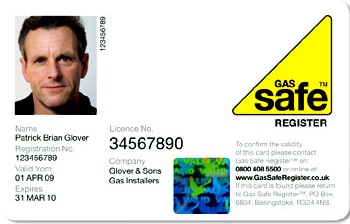
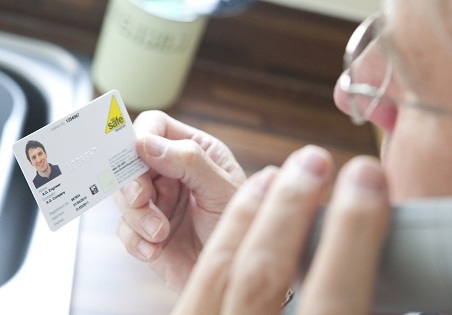
The Gas Safe Register highly advise that you always find an engineer that is part of the register. You can check this by asking to see their Gas Safe ID card, which will contain a unique license number. The front of the card will also display these important details:

  • The engineer's photo
  • The start and expiry dates
  • A security hologram
  • That engineer is from the business you employed

Meanwhile, the back of the card will also have printed on it whether that engineer is qualified to do the work you've hired him for and whether these qualifications are up to date. Should that fail, you can also check online or phone the Register on 0800 408 5500. This number is also the one to call if you suspect a fraudulent gas engineer.

How do I apply for a Gas Safe ID card?

First, you need to submit the name, address, phone number and trading title of your business to the Gas Safe Register. Then, you'll need to provide your National Insurance number and the National Insurance numbers of any engineers working for you. Once you've paid for your Gas Safe Id card, and the necessary checks have been done, it will be sent out to you.

What are the Gas Safe ID card categories?

Depending on what level of qualification you have, your Gas Safe Id card will show one of two categories, domestic or commercial work. This indicates the type of work that you're qualified to do. If you've got a gas engineer attending your property, but you're not sure if they're qualified for the domestic or commercial work at hand, you can ask to see their Gas Safe ID card to check this.

Can the gas safe register review gas work?

If you feel that gas work carried out at your home is unsafe, you can raise your concerns with the Gas Safe Register directly. They will record the problem and can even arrange an investigation of the problem. Once the investigation has been done, a report can be sent to you and your gas engineer so that any problems can be dealt with appropriately.

If you're unsure how to find a Gas Safe Registered engineer in your area, you can also contact the Gas Safe Register for their recommendations. They can highlight gas engineers and professionals in your local area that may be able to carry out a service for you.

So there you have it, a little bit more about the Gas Safe Register and what it does. If you need gas work done always be sure to check your engineer is registered, and if you're a register remember that being part of it is a legal requirement!

To mark Gas Safety Week, Access Training are offering 20% off our professional gas course from now until the end of September. To take advantage of this offer all you need to do is quote "GASWEEK" when speaking to one of our course advisors. You can contact them on 0800 345 7492.

An important part of Gas Safety Week is making sure people know exactly what to do in the event of a gas leak.

Every year thousands of people across the UK are diagnosed with carbon monoxide poisoning. This highly poisonous gas can't be seen, smelled or tasted, but can kill quickly and without warning. Early symptoms of carbon monoxide poisoning include headaches, dizziness, nausea, breathlessness and then eventually collapsing and even loss of consciousness. As an invisible gas, carbon monoxide can be extremely difficult to detect. However there are ways that you can determine whether an appliance (such as fires, heating boilers, water heaters or cookers) are dangerous. These include:

  • The pilot light continually blowing out
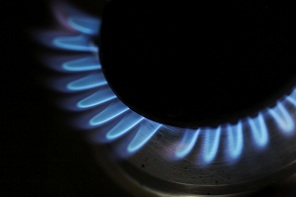
  • An orange or yellow flame rather than a blue one
  • A discoloured scorched area on an appliance
  • A musty smell or signs of soot
  • More condensation than normal on windows

If you see any of these things, whatever you do DO NOT try to attempt any sort of repair work yourself - you could only end up making it worse. Instead what you should do is call the free emergency gas number on 0800 111 999 and follow their instructions. As soon as you suspect a leak, don't start any flames or operate electrical switches. Make sure to put out any fires, open doors and windows to air out the rooms, keep people away from the area and turn the gas off at the control valve. 

Once you've made the call, a trained operator will log a number of details onto a computer. The kind of questions they'll ask you are:

  • Your name and phone number
  • The address and postcode of the suspected gas emergency 
  • How many people are at the property 
  • Where the smell is most noticeable 
  • How long the smell has been noticeable
  • Are any neighbours affected 
  • Any special circumstances or access information
Following that you'll be asked a number of questions to determine the severity of the situation. This information will be recorded and sent off to an engineer to take action if its required.


One of the ways the Gas Safe Register has decided to mark Gas Safety Week by launching the very first nationwide interactive gas map, which can be viewed at www.staygassafe.co.uk.

This map reveals just how many unsafe gas appliances have been found across the UK, how many gas-related accidents or emergencies have occurred and even how many unregistered gas fitters have been caught preying upon the public. It's the first time this level of information has been recorded and compared across postcodes, and the results aren't looking good for the capital of Wales.

Cardiff ranked second only to Birmingham as the area with the highest number of unsafe homes, at a total of 31.1%. The full top 10 (if you can call it "top" that is) of unsafe places in the UK can be viewed below:

1. Birmingham (34.2%)

2. Cardiff (31.1%)

3. Edinburgh (30.9%)

4. Norwich and Ipswich (27.9%)

5. Coventry (27.8%)

6. Manchester (27.5%)

7. Bedford (27.3%)

8. Glasgow (25.2%)

9. Milton Keynes (24.2%)

10. Bradford (23.3%)

While there may not be a whole lot in it between the places, these numbers are still significantly higher than they should be. So where did the research find is the safest places? Brighton took the prize with just 5% (1 in 20) homes found to be dangerous, followed closely by Liverpool (6%), Southampton (6%), Northampton (7%) and Hull (8%). 

The data inspected just under 100,000 homes in Great Britain in the last three years, and found that one in six homes, the equivalent of 4.28 million households, had an unsafe gas appliance. Appliances in one in 25 homes were immediately dangerous and if left unchecked were at risk of causing a gas fire, explosion, leak or carbon monoxide poisoning.

One in three gas customers in Great Britain (around 7.69 million households) also admitted that they’ve never had their gas appliances checked or maintained, despite eight in 10 people (82%) recognising that it needs to be done to protect them from gas dangers. Gas Safe Register’s inspections further found that gas fires are the most dangerous gas appliances in homes. One in three gas fires checked by the Register were unsafe, compared to one in 11 boilers and one in 13 cookers. Just like boilers, gas fires and gas cookers need to be checked and maintained regularly to remain safe.

The public is also being caught out by cowboy unregistered gas fitters, pretending to be legal engineers. One in 10 people admit they took it on trust that their gas engineer is legally registered and never checked if they were. Nearly 3,000 illegal gas jobs have been investigated by Gas Safe Register since 2010, of which nearly two in three (61%) left victims’ homes unsafe and one in five were so dangerous that the Register had to turn off the gas appliance immediately.

Russell Kramer, chief executive for Gas Safe Register, said: "Gas safety is a life or death matter and something that shouldn’t be ignored. People are aware of the potential risks of unsafe gas work and they know what they should be doing to keep themselves safe, but as our research has found, not everyone is acting on that information. This is why we have launched the gas map. It is the first time that data on unsafe gas appliances and illegal gas work has been compared across postcodes in Great Britain. We want people to realise that gas safety is something that they should take seriously and by bringing it to their doorstep it makes it harder to ignore.

"We hope to see millions of people using the gas map during and beyond Gas Safety Week to get a better understanding of how they can protect themselves. Some areas are more at risk, but even in safer areas there is no room for complacency. You only need to enter your postcode to find out localised information about your area. You can also sign up for a free reminder service to get your appliances checked, so that you don’t forget to do this vital and life saving check every year, and search for registered engineers. Our messages this Gas Safety Week are simple – get your appliances checked every year, sign up for our reminder service and only use a Gas Safe registered engineer. It could save yours and your family’s lives."

If you're a Cardiff gas engineer, its up  to you to help lower this figure and get our city off of the table. Meanwhile, if you're a trainee gas engineer or looking to enter the gas trade, it is essential that you not only get the right qualifications, but get Gas Safe registered so that you are legally permitted to work on gas appliances and installations across the UK. An Access Training gas course will provide you with everything you need - expert tutelage, professional qualifications and the best foundation work possible for you to go on and become Gas Safe. To find out more take a look at our courses page or contact one of our team on 0800 345 7492.


Gas Safety Week: Keeping our nation safe

Access Training are proud to be supporting Gas Safety Week taking place 16th - 22nd September 2013.

Gas Safety Week is an annual safety week to raise awareness of gas safety and the importance of taking care of your gas appliances. It is co-ordinated by Gas Safe Register, the official list of gas engineers who are legally allowed to work on your gas boiler, gas cooker and gas fire.

Badly fitted and poorly serviced gas appliances can cause gas leaks, fires, explosions and carbon monoxide poisoning. Every year thousands of people across the UK are diagnosed with carbon monoxide poisoning. It is a highly poisonous gas. You can’t see it, taste it or smell it, but it can kill quickly with no warning.

If you’re a Gas Safe registered engineer why not get involved and help remind customers they should:

  • Check their gas appliances every year. Gas appliances should be safety checked once a year and serviced regularly by a Gas Safe registered engineer. Tenants – make sure the landlord arranges this.
  • Check their engineer is Gas Safe registered. They can find and check an engineer at www.GasSafeRegister.co.uk or call 0800 408 5500.
  • Check their engineer’s Gas Safe Register ID card. Make sure they are qualified for the work they need doing. They can find this information on the back of the card.  
  • Check for warning signs their appliances aren’t working correctly e.g. lazy yellow or orange flames instead of crisp blue ones, black marks on or around the appliance and too much condensation in the room.  
  • Check they know the six signs of carbon monoxide poisoning – headaches, dizziness, breathlessness, nausea, collapse and loss of consciousness.  
  • Check they have an audible carbon monoxide alarm. This will alert them if there is carbon monoxide in their home.

Be part of this national campaign with events, advertising and PR taking place across the country to help keep the nation Gas Safe. To get involved and order materials to raise awareness of gas safety visit www.gassafetyweek.co.uk. Alternatively email marketing@gassaferegister.co.uk.

Following our plumbing glossary yesterday, Access Training have also put together a brief post covering common electrical terms that will be handy for all the aspiring electricians out there - whether they're DIY enthusiasts or aiming for a professional career.

Bonding: The process by which all metal parts in a circuit are electrically connected together and then linked to a real earth. This is done to prevent any metal component within a building becoming dangerous should it become live due to an electrical fault or damage. Any fault should cause the circuit protection device to operate and isolate the incoming mains.

BS 7671: Currently in its 17th Edition, this is the UK national safety standard for electrical installation work.

Consumer Unit: These are used to control and distribute electricity around the home. They usually contain a mains switch, fuses/circuit breakers and one or more residual current devices.

Earthing: In the event that there is a fault in the circuit, this will minimise the risk of an electric shock. It provides a path for the faulty current to flow safely to earth, causing the protective device (such as a fuse) to disconnect the circuit and stop the danger. An electrician should check that the earthing and bonding is satisfactory before starting any work.

Electrical Installation Condition Report (EICR): A report on the condition of your electrical wiring, containing an overall assessment of the safety of the wiring, observations on its condition, and a number of recommendations (in order of priority) for action (if any is required) to restore the wiring to a satisfactory condition for continued safe use. These were formerly known as Periodic Inspection Reports (PIRs).

Flush-fitted: These are electrical switched or sockets that have been installed so that their back boxes are contained within the wall or ceiling, making only the front plates visible. This often looks nicer than surface mounted connections but usually requires chasing to complete.

Miniature Circuit Breaker (MCB): These are automatic protective devices fitted into fuse boxes. They will disconnect a circuit should there be a fault or overload.

Part P: The specific section of the Building Regulations for England and Wales, which relates to electrical installations in domestic properties.

Surface-mounted: This is when switches and sockets are installed on top of a surface rather than behind it. While it is less seamless than flush-fitted installations, it causes less disruption to any decoration that surface may have.

Two Way Switch:  Switches which can be used in pairs so that either can turn a light on or off. Each switch has terminals allowing them to be linked using Three Core and Earth cable.

Of course once again this is only a very brief look at some of the things electricians come across on a daily basis, and is no substitute for proper comprehensive electrical training. If you would like to find out more about what it takes to become an electrician, earn valuable skills and the qualifications to go professional - Access Training have exactly what you need. With courses suitable for both trainees and homeowners looking to do a spot of DIY on their property, now has never been a better time to gain a better understanding of the electrical trade. Please visit the courses section of our website or alternatively get in touch with our team on 0800 345 7492.

While good practical training may be the most vital quality to have in a plumber, it's important that they also have a good grasp of the common terminology they may come across while on the job. So, Access Training have put together a very basic glossary of various plumbing terminology, which will hopefully be of benefit to some of you.

Actual capacity: The amount of water contained in a cistern or other container when it is full to its practical working level.

Air-lock: Air trapped in pipes, causing a reduction or complete stop in the flow of liquid.

Back-siphon: A condition where the flow of liquid is reversed and siphons back towards the source, which can lead to contamination.

Bar: The unit that water pressure is measured in.

Bleed valve: A valve that releases air from the central heating system.

Cistern: A contained used for holding water at atmospheric pressure.

Flow rate: The volume of water that is delivered to a tap, recorded in litres per minute (l/m) or litres per second (l/s).

Grey water: Waste water from domestic processes.

Hard water: Water which contains a higher level of calcium salts, making it an alkaline. When heated it deposits the salts on various components in a system, causing "furring up".

Main water valve: The main water shutoff that prevents any water from going into any of the pipes or plumbing. Plumbers may refer to it as the main shutoff valve.

Nominal capacity: The amount of water contained in a cistern or other container when it is full to the top edge.

Soft water: Rain water that falls on peaty, moorland and sandstone areas and is acidic. Soft water is better for washing, but can lead to many corrosion problems.

Stopcock: A hand operated on/off valve permitting water flow in one direction. The house stopcock is located where the supply enters the property, and can be used to shutoff water to all fixtures in the house.

Storage cistern: A specific type of cistern used for storing water to be used, such as delivering hot and cold water through pipework.

Supply pipe: A pipe that carries mains cold water around the home.

Tank: A container that is not open to atmosphere, usually a non-cylindrical closed vessel.

Vent pipe: Pipe that allows the release of air or water from a hot water system.

Of course this is only a very brief glossary, and missing many of the things you'll need to know as a professional plumber. If you would like to learn more and perhaps even gain the qualifications needed to become a plumber, an Access Training plumbing course could be exactly what you're looking for. To find out more please visit the courses section of our website or give us a call on 0800 345 7492.

New research conducted by Pink Plumbers, a national brand delivering female plumbers, has found that more women have the desire to become their own boss in the workplace then men.

The research, which was carried out last May, had a sample of 2000 adults from across the UK. It found that almost two out of three people (63%) wanted to take the steps toward self-employment. A total of 66% women wanted to be their own boss, narrowing out the males asked who came in at 60%.

Pink Plumbers was set up by single mother and entrepreneur Jo Lawrence, who created the franchise to make it easier for women wanting to join the plumbing trade by offering support and confidence. There is a clear gap in the market for female plumbers, with her research also noting that 86% of women think there should be more women working as plumbers. 69% of men also agreed.

Apart from setting up her Pink Plumbers franchise, Lawrence has also been proactive in organising a series of college roadshows across the UK, speaking to students about her own experiences as a plumber. She will also be publishing a book titled Hints and Tips for the Practical Plumber, which is due for release in September. It is designed to provide business and plumbing tips to help plumbers navigate through the difficulty of setting themselves up. 

Encouraging trainee plumbers to take the steps to become self-employed is also something we encourage here at Access Training. As well as providing you with vital qualifications through our range of bespoke plumbing courses, our teaching staff will also guide you on how to set up your own plumbing business. If you would like to find out more about what Access can offer you, please contact us on 0800 345 7492.

Via HVP Magazine

With Gas Safety week coming up soon Access Training will be highlighting the importance of gas safety in our blog in the lead up to 16-22 September. However this isn't always going to be in a fun and educational way - yesterday the Heating, Ventilating & Plumbing magazine reported two separate instances of dishonest traders either fined or leaving people at risk because the tradesmen were not Gas Safe Registered.

The first article reports that a self-employed heating installer from King's Lynn was fined for illegally carrying out sub-standard gas work at two homes in Norfolk. Ryan Neale, trading as R. Neale Plumbing and Heating, installed gas appliances and pipework despite not being Gas Safe registered. He was fined a total of £2,000 and ordered to pay a further £1,000 in costs after pleading guilty to two separate breaches of the Gas Safety (Installation and Use) Regulations 1998 for his work at each property – four charges in total.

Secondly, a London heating installer was also fined for illegal and unsafe gas work. Abhishev Yadav, 28, of Greenwich, installed a boiler at a property on Penywern Road, Earls Court, that was later classed as ‘at risk’ because the flue was not properly sealed or secured. He carried out the work in March 2011 on behalf of his firm Ability Heating, while falsely claiming to be Gas Safe registered. He was was fined a total of £7,500, and ordered to pay £2,500 in costs plus a £120 victim surcharge for breaching the same regulations.

In response to these stories,  Gas Safe Register chief executive Russell Kramer has issued this statement: "Every Gas Safe registered engineer has an ID card which shows who they are and the type of work they are qualified to carry out. Customers should ask to see this and check the engineer is qualified to do the job in hand. You can also check your engineer by calling us on 0800 408 5500 or by visiting www.gassaferegister.co.uk.

Joining the Gas Safe Register is a legal requirement of any tradesman installing, maintaining and decommissioning gas appliances and can only be achieved when they have been awarded all of the relevant gas qualifications. The register can also be used by homeowners to search for a suitable tradesman in their area, or to ensure that the one they've hired is a legitimate gas engineer. 

If you're interested in earning the qualifications to become a qualified gas engineer, Access Training offer comprehensive gas courses that will have you well on your way to success. Completing our courses successfully will give you the skills and knowledge to join the Gas Safe Register and start a new and rewarding career. To find out more give us a call on 0800 345 7492.

Gas Safe has proved time and time again to be an effective method in separating genuine gas engineers from cowboy traders, so that the general public know that when they hire a tradesman he or she is legitimate. But despite this, this sort of system is currently only available for gas engineers - so Joe Bloggs may not have the same level of certainty when hiring a plumber for wet work.

Until now that is. Or more precisely, October 8th 2013.

WaterSafe has been put together to provide a search facility of all Approved plimbers working in the UK, thanks to a partnership between UK water suppliers and the seven Approved Contractors' Schemes working across the UK. It will promote compliance with the Water Supply Regulations 1999 and Scottish Water Byelaws in order to protect the public and make it even more difficult for unqualified dishonest plumbers to get work. Unlike the Gas Safe register this isn't a legal requirement, but will publically show plumbers are both fully qualified and competent in their trade. So arguably its something that's probably in your best interest to do.

WaterSafe's website isn't open just yet, however it can be found at www.watersafe.org.uk where you can find all the relevant contact details to find out more about the scheme. Keep checking back to this blog, as we're sure to be covering more of this brilliant new scheme closer to its official launch.

In the meantime - if you have any outstanding plumbing qualifications or are looking to become a professional plumber yourself, have you considered a comprehensive plumbing course from Access Training? Our courses are suitable for both newcomers and experienced plumbers alike, so give us a call on 0800 345 7492 or check out the courses section of the site to find out more.

Get in touch to learn more about our training courses!

First Name *
Surname *
Telephone Number *
E-mail address *
Ask A Question *
 
Security Character Security Character Security Character Security Character Security Character Security Character
Enter Letters (No Spaces) *