ELECSA and NICEIC operators NAPIT and Certsure have come together to create a single place consumers can go to find a fully qualified electrician. This easily identifiable mark will cover all full scope Part P registered electricians and is planned to roll out this year.

The two associations both created their own individual registers last year, but have since realised the advantages of creating a single one to avoid confusion. In addition to this, both feel that the attention given to the launches has proved a distraction from key issues in the electrical industry - namely safety and quality. To overcome this, NAPIT and Certsure met back in November to discuss the way forward in terms of promoting competent, qualified electricians.

The proposal that has been put forward is anticipated to include all licensed Electrical Competent Person Scheme Operators in England and Wales who are approved by the DCLG to run an electrical certification scheme, who have been said to be "happy with the plans" in principle. The schemes will continue to operate individually in accordance with current Building Regulations, however they will now also promote the new quality mark as well as their own.

Emma Clancy, Chief Executive Officer of Certsure, said consumers will now benefit from a single point of reference, making it far easier for consumers to locate a registered electrician in their area. NAPIT Chief Executive Michael Andrews added that the new register will also "ensure that electrical installers continue to be able to take advantage of the choice and value for money that comes as part and parcel of healthy competition in the marketplace"

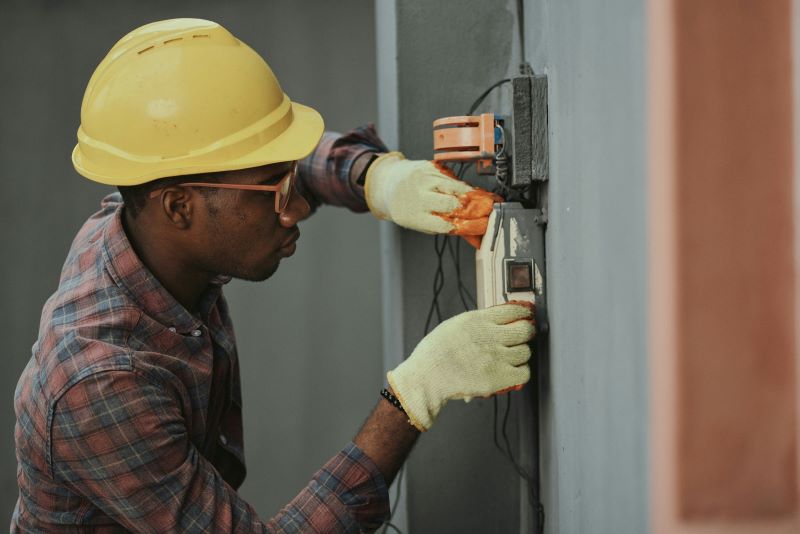
When becoming a fully qualified electrician, gaining your Part P qualification and joining a Competent Persons Scheme is an incredibly important step to take. It ensures consumers that you are fully qualified and able to perform electrical installations, setting you apart from the so-called "cowboy builders" that plague the industry. Not only that, but a Part P qualification allows electricians to self-certify their own work. This means you can sign off on any installations without having to inform your local building authority - saving you a considerable amount of money in inspection fees.

The Part P qualification, along with all electrical qualifications needed to become a full-time electrician, is available as an intensive course from Access Training Academies. If you would like the steps to become a fully-fledged electrician, take a look at the courses we have on offer and give us a call on 0800 345 7492 today.

Having fully completed his professional electrician course, ex-rugby player and Access Academies student Xavier Rush has now turned his attention towards retraining in a second trade and begun a plumbing training course with us. We caught up with him during the fourth week of his six week course to find out how he's getting on and how the plumbing training has differed from his previous experience with the electrical training course. One thing's for sure, it's a very different experience to playing rugby for both the All Blacks and Cardiff Blues...

How are you finding the change from electrical work to a plumbing course?

It’s definitely the most practical I’ve done so far! There was a lot of theory with the electric but theory there is here is probably a lot easier to grasp. But then it’s also far more hands on too. It’s very busy – we’ve been working with low carbon steel and a lot of copper as well. I fitted a bathroom last week which was enjoyable – it’s nice to step back and see the results sometimes.

But a lot like the electric these are intense course and you pick up a lot of information and skills quickly. It helps that you’re learning from people who’ve been in the industry a long time.

Had you done any plumbing before starting the course?

No, before this I didn’t have a thing – I couldn’t even stop a leak. You’ve got to pick it up quite quickly as there’s no one there holding your hand. Once you’ve got an understanding of it all it gets a lot easier. It’s just knowing what fittings do what and what products you’re working with, that sort of thing.

Have you found anything especially difficult over the last four weeks?

I suppose it just takes you a while before you get competent with everything really. Nothing is truly mind boggling. There were a few issues fitting a bath, but it’s the kind of stuff you can get your head around.

How have the tutors been?

They’ve been great and a really big help this week especially. They don’t baby you at all, but make sure to tell you exactly where you’ve gone wrong – which is exactly what they need to do. If you were working in someone’s house and you spring a leak and their lounge ceiling falls in you’re going to be in trouble. So you’ve just got to know. It’s just like anything – the more you practice you have, the better you get. Its good being here because if you’re going to make mistakes make them here, that way I can waste your copper rather than mine!

How have you found the studying at home element of the course?

Like I said, you are picking up a lot of information in a short time so while you’re here you’ve really got to apply yourself for the six weeks. There’s a lot of going home, revising, getting ready for exams because if you don’t do the homework you don’t get the passes. You have got to read the book and retain that information. I’ve had many a late night drinking coffees at Starbucks looking like a bit of a geek.

And finally, how much time do you have left here before you’re all done?

I’ve got two more weeks after Christmas. It’s been an intense four weeks so it’ll be nice to have a bit of a break and then come back and hit it again. Because we’ve done so much over the last few weeks and put so many fittings together you should be able to retain a lot of the information. And then after that that’ll be it for me…for now! I might come back and do the one week electrical testing course just to freshen up on that. But it’s just brilliant to come here and reskill so quickly as an older person. I did carpentry when I left school but to think now I’ve got plumbing and electric qualifications backing that up. And to feel confident with that within ten weeks is berserk really – they’re skills you’ve obviously got for life.

I can look at stuff in houses now and understand it. Obviously it doesn’t give you all the experience – you’re still going to go out there and make mistakes but it’s given me a really good grasp of both industries, both the electric and the plumbing.

As Xavier approaches the end of his Access Academies training, we'll be talking to him again in the new year to discuss his overall experiences and his plans for the future. In the meantime if you have any questions you'd like to ask him about changing careers and retraining in a new trade, please let us know over on Twitter or Facebook. If you yourself would like more information on Access' extensive range of trades training courses (also including gas engineering, carpentry, bricklaying, plastering, tiling and painting/decorating), please get in contact with one of our course advisers on 0800 345 7492.

Via InstallerOnline

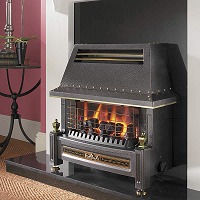
Despite the advances in electric fires and other forms of household heating, gas fires are still proving to be the number one choice for homes. So if you're looking to go out and get your gas certificate to become a qualified engineer, you'll be pleased to know that business is just as good as ever.

As well as the authenticity and flame effect which prove highly popular among the public, gas is still the cheapest fuel to run. On average, 1kW of gas supplied by British Gas costs just 4.662p (including VAT) compared to nearly 14.259p (including VAT) for 1kW of electricity - a number that seems to only be going up these days. Not only that, running a gas fire is actually more beneficial to the environment too, as it delivers half the CO2 emissions of an electric fire.

Gas fires are also far more efficient than they were back in the 80s, with developments in technology making them capable of delivering heat efficiencies of over 80% and heat outputs of 4.0kW - more than enough to heat your living room! But most of all a gas fire is reliable - if by chance your boiler were to break down over the winter (say, due to condensation freeze), you'll still be able to keep safe and warm until everything is back up and running.

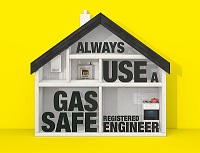
Gas heating is just as vital now as it was 20 years ago, and Britain will continue to need engineers who have received the proper gas training. At Access Training you'll be able to learn all about the gas trade on one of our intensive training courses, eventually going on to complete a guaranteed work placement and subsequent ACS assessments. After that you'll be able to join the Gas Safe register and legally work on all forms of gas installation and appliance in the UK. Reckless gas maintenance can cost people their lives, so we're sure to make sure ALL of our students are training to the required professional standard.

To find out more give Access Training a call on 0800 345 7492.

Is the popularity of a good relaxing bath in decline?

A new study from online bathroom retailer UK Bathrooms seem to think so, as their research has found order trends and customer feedback for baths has had a 54% decrease in the last year. On the other hand, the popularity of showers seems stronger than ever which has seen a staggering 72% increase. The study even found that three quarters of British homeowners would choose to install a shower in their home over a bath.

The survey looked at 1342 homeowners in the country, and was part of ongoing research into the opinion about bathroom styles. Respondents were also revealed the reasons why they considered showers to be superior to baths - 46% considered it much quicker, while 34% also added that a shower left them feeling much cleaner than a bath did.

Moving on to bathrooms themselves, 40% of respondents only had showers in their bathrooms, with 28% only having a bath and 32% owning both. If they were to move or renovate their bathrooms, 78% said that installing a shower was of much higher priority than a bath. Why? 51% considered showers to be the speedier option, while 37% also preferred it because showers take up much less space than a bathtub.

Whether you're a bath or shower person (or both!), the winner here is still bathroom installers and plumbers in general. Whether your customer wants a shower or bath (or again, both!) installed, a fully qualified plumber is the only man for the job. If you're interested in specifically going into bathroom fitting, Access Training also offer specialised bathroom fitting courses to provide trainees with everything they'll need to know to perform the job to a professional standard.

To find out more give Access a call on 0800 345 7492 today.

Fire service data indicates that over 20% of domestic fires are caused by electrical faults, with this figure increasing during the festive season.

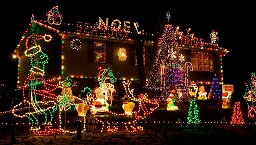
As the festive season fast approaches, some of you will be planning your part in the annual “Battle of the Illuminations” with your neighbours. This year you will want more lights, bigger, brighter, and more colourful for a more dynamic display that will make people stare in amazement.

All of your socket outlets will be put to use, many with multi-way extension leads attached. Will you be checking to see if your installation can safely cope with the extra load? No! Don’t be daft its Christmas, it will be ok!

Will you check the lights to make sure that they are safe to use?

  • Are they the correct type of lights for use outdoors?
  • Are the flex, plug and leads un-damaged?
  • Are the plugs fitted correctly and do they contain the right fuse (usually 3Amp)?
  • Are all the lamps the correct rating (voltage, wattage)?

Or shall we just trust to luck?

Then on one December evening your home becomes the focus of everyone in the neighbourhood. People from all over, standing wrapped in coats and scarves watching the awesome display that is before their eyes. A myriad of multicolour flashing lights illuminating jets and sprays of water as the local fire service battle to save your home!

One small spark is all it takes to start a devastating fire, do yourself (and your family) a favour this Christmas – check your lights (or get a qualified electrician to check then) before you put them up and use RCD’s to protect each ‘string’. A small price to pay to have a Merry Christmas with your family– in your own home!

Season’s Greetings,

- Mark Jenkins.

Mark Jenkins is the Electrical Course Development Manager here at Access Training. If you would like to take the steps to become a professional electrician, our electrical training courses are the fastest and most effective way to build up the skills you need and gain the necessary qualifications for a prosperous career in the industry. To find out more give us a call on 0800 345 7492.

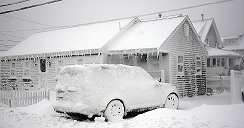
December may not seem like the most suitable time to be studying on a trades training course to become a professional tradesman, but the truth is these winter months are actually when plumbers, electricians, gas engineers, bricklayers and roofers are needed more than ever. With the end of the year just around the corner and the cold weather homing in on Britain, government-endorsed standards group Trustmark is warning owners to ensure that their homes are fully prepared before the harsh season hits.

Trustmark have already noted a rise in tradesperson viewings on their online database during October, which saw an a 36% increase in comparison to 2012. Across the trades roofers (32%), plumbers/heating engineers (35%) and electricians (20%) were the ones to see the biggest rise, and with heavy snow forecast until May 2014, these professionals are going to be needed more than ever.

Below is a list of quick spot checks Trustmark recommend doing to help reduce the risk of the winter weather causing damage to your home:

  • Most importantly, you should get your boiler and central heating checked/serviced by a Gas Safe registered engineer. By making sure your boiler is in peak condition, it will burn far more efficiently - meaning it'll use less fuel AND be warmer. Checking your boiler/central heating also means that if there is any serious problems, you'll be avoiding any tragedy that could happen.

  • Make sure your insulation is in good quality. Not just your loft, but also look into lag pipes, water tanks and draught excluders.

  • Clean out gutters and outlets of any leaves and debris, followed by checking for any leaks or damage.

  • Look out for any damaged or loose tiles on your roof (from ground level to ensure your safety). Leap an eye out for any leaks or condensation appearing on the ceiling.

  • Make sure no exterior walls have any cracked, loose or missing pointing. If they do, be sure to get it fixed before water can get into it.

They also highly recommend keeping a useful list of phone numbers of tradespeople in your area just in case of an emergency - plumbers, electricians, gas engineers, roofers, carpenters...whoever you might need if a problem should arise.

So if you're a tradesperson yourself, be prepared for your work to be more crucial to homeowners than ever - you never know when you're going to be needed. Alternatively, if you're looking to start a new career as a fully-qualified tradesperson now could be the perfect time to start. An intensive course from Access Training Academies can have you up and qualified in a matter of weeks - just in time to help those in need. To find out more about our range of courses, including plumbing, gas, electric and various construction trades, please give our advisers a call on 0800 345 7492.

is my electrician qualified

When hiring an electrician to work in your home it's important to ensure that they've completed a suitable electrical training course and earned all of the necessary qualifications. You may think this goes without saying, but research shows a shocking quarter of UK adults do not use registered electricians, and over one third of Brits have hired an electrician based on a recommendation, without checking their credentials!

To learn how to check if your electrician is registered and why registration and qualifications are so important, keep reading...

More...

New figures from the Gas Safe Register have warned that around 900,000 homes could be at risk from a gas explosion, fire or leak resulting in carbon monoxide poisoning.

The UK's official gas safety authority has been inspecting nearly 43,000 homes nationally since January last year, and found that more than one in five (22%) privately rented homes were at risk. The 900,000 figure is an estimate of when all 4.1 million privately let homes are taken into account. This figure was noticeably higher than homes privately owned or rented through a local authority/housing association, which were at 16% and 12% respectively.

As per the Gas Safety (Installation and Use) Regulations 1998, landlords are legally required to ensure that all gas appliances and flues at safe in the properties they let. This involves arranging annual safety checks from a registered gas engineer. The legal requirement doesn't stretch to homeowners, but is also highly recommended by experts. A registered gas engineer is one who will have completed all the relevant gas training and gained the necessary qualifications, and then joined the Gas Safe Register - something which is also a legal requirement for gas engineers.

To combat this alarming figure, the Gas Safe Register is urging tenants and landlords alike to sign up to a free annual gas safety service reminder at StayGasSafe.co.uk, where users will receive an email telling them when their appliances are due for a check. In addition to these checks, landlords are also responsible for any repair work required to appliances or pipework. Should they not fulfil these obligations then they face prosecution, resulting in fines or even imprisonment in extreme cases.

Sarah Hill, Stakeholder Relations manager for Gas Safe Register, said: "Signing up for an annual gas safety reminder can help landlords stay on the right side of the law and most importantly, keep their tenants safe."

...

Are you an existing gas engineer in need of renewing your qualifications? Or alternatively a beginner looking to start a new career in the gas trade? Joining the Gas Safe Register is a legal requirement of all engineers, and this can only be done after earning the proper qualifications. Access Training Academies' instensive gas course will provide you with all the training you require, including a guaranteed work placement where you will be able to gather evidence of your work for the required gas portfolio. To find out more about the course and book your place, please call us on 0800 345 7492

So you're reaching the end of your electrical training course and wondering what comes next. With qualifications in hand, its time to set up that electrician career you've been dreaming of. But which is the better route to go down - become a domestic electrician or become a commercial one?

The main questions you'll be asking yourself are "What's the difference", "Which is better?" and "Which will give me better job satisfaction?". Here we'll try to explain some of the big differences between the two different electrician career choices and hopefully help point you in the right direction.

The easiest place to start with would be definitions. While a domestic installer deals with dwellings such as houses/flats/bungalows/etc, a commercial electrician's forte lies working in a wide variety of professional sectors - be it industrial, agricultural or more. Domestic installers work tends to mainly deal with single phase electrics, while a commercial electrician could find themselves installing a variety of cables including both single and three phase.

Aside from job description, one of the biggest differences between the two is the kind of lifestyle you'll be living. Most domestic installers tend to go the route of self-employment, setting up their own electrical businesses. The advantages to do this are:

  • Uncapped pay
  • You get to decide your own working hours
  • A good variety of domestic jobs
  • Face to face interaction with your customers

Meanwhile, a commercial electrician tends to be part of a larger company, which while doesn't quite have the freedom of self-employment has its own advantages - especially if you're someone who prefers the stability of a yearly salary and set work hours:

  • Jeb security
  • Length of jobs
  • Working as part of a team
  • Working in a wide variety of different sectors and locations
  • Promising career progression
  • Offers areas which you can then specialise in
If you're still not sure which is the right path for you, the good news is that all electrical training starts from the very beginning - so an Access Training course will give you the perfect basic training before you decide which route you'd like to go down. To find out more and speak to one of our course advisers, please give us a call on 0800 345 7492 today.

Get in touch to learn more about our training courses!

First Name *
Surname *
Telephone Number *
E-mail address *
Ask A Question *
 
Security Character Security Character Security Character Security Character Security Character Security Character
Enter Letters (No Spaces) *