Here at Access Training, we constantly stress the importance of safe electrical practice in the workplace, but this unfortunate incident really brings it home!

On the 12th of April 2017, two demolition workers were tasked with removing electrical distribution equipment from a switchgear room at the Molecular Products site in Essex. The principal contractor had told the men that the electrical equipment they were dealing with had been fully isolated.

Foolishly, one man attempted to 'reassure his colleague' that the electricals had in fact been isolated by throwing a metal crowbar at the 400v ac equipment.

Unfortunately, when the crowbar came into contact with the live electricals it created a flashover (explosion) at temperatures of several thousand degrees which led immediately to quite a devastating fire. The man who through the crowbar, Mr Banks, suffered serious burns and was taken into hospital.

HSE investigated this incident and found that the task had not been properly planned at that suitable control measures hadn't been put in place. The principal contractor had failed to follow the procedures stating that all electrical equipment should be treated as live until properly checked and confirmed to be isolated. 

The Consequences:

  • Mr Banks sustained horrific burns & injuries
  • Russel Haigh and Stuart Haigh pled guilty to breaching Regulation 3 of the Electricity at Work Regulations  Act 1989 and we both fined £80,000
  • AJ Wadhams & Co Ltd pled guilty to breaching section of the Health and Safety at Work etc Act 197 and was fined £80,000

HSE inspector Adam Hills said:

“This incident has had a significant impact on Mr Banks life and the injuries could so very easily have been fatal. Had the companies followed the control measures outlined in their respective risk assessments, then this incident would not have occurred. Never assume that an electrical supply is disconnected. Always check with the distribution network operator or a qualified electrician to obtain written proof of isolation before commencing work.”

Read more about this incident here >

 Electrical Training

If there's one thing to take away from this, it's that working with electricals can be incredibly dangerous (and costly) if something goes wrong. That's why we can't stress enough how important it is that you receive the proper electrical training before carrying out this kind of work!

Here at Access Training Academies, we offer electrical training for students of all ages and abilities. If you're interested in pursuing a career in electrical work, come and learn the necessary skills and practices at one of our training centres. 

View Our Electrical Courses >

If you have any questions about our electrical courses, or to arrange a visit to one of our test centres, please don't hesitate to get in touch. You can call us on 0800 345 7492 or email us at info@accesstraininguk.co.uk.

Having fully completed his professional electrician course, ex-rugby player and Access Academies student Xavier Rush has now turned his attention towards retraining in a second trade and begun a plumbing training course with us. We caught up with him during the fourth week of his six week course to find out how he's getting on and how the plumbing training has differed from his previous experience with the electrical training course. One thing's for sure, it's a very different experience to playing rugby for both the All Blacks and Cardiff Blues...

How are you finding the change from electrical work to a plumbing course?

It’s definitely the most practical I’ve done so far! There was a lot of theory with the electric but theory there is here is probably a lot easier to grasp. But then it’s also far more hands on too. It’s very busy – we’ve been working with low carbon steel and a lot of copper as well. I fitted a bathroom last week which was enjoyable – it’s nice to step back and see the results sometimes.

But a lot like the electric these are intense course and you pick up a lot of information and skills quickly. It helps that you’re learning from people who’ve been in the industry a long time.

Had you done any plumbing before starting the course?

No, before this I didn’t have a thing – I couldn’t even stop a leak. You’ve got to pick it up quite quickly as there’s no one there holding your hand. Once you’ve got an understanding of it all it gets a lot easier. It’s just knowing what fittings do what and what products you’re working with, that sort of thing.

Have you found anything especially difficult over the last four weeks?

I suppose it just takes you a while before you get competent with everything really. Nothing is truly mind boggling. There were a few issues fitting a bath, but it’s the kind of stuff you can get your head around.

How have the tutors been?

They’ve been great and a really big help this week especially. They don’t baby you at all, but make sure to tell you exactly where you’ve gone wrong – which is exactly what they need to do. If you were working in someone’s house and you spring a leak and their lounge ceiling falls in you’re going to be in trouble. So you’ve just got to know. It’s just like anything – the more you practice you have, the better you get. Its good being here because if you’re going to make mistakes make them here, that way I can waste your copper rather than mine!

How have you found the studying at home element of the course?

Like I said, you are picking up a lot of information in a short time so while you’re here you’ve really got to apply yourself for the six weeks. There’s a lot of going home, revising, getting ready for exams because if you don’t do the homework you don’t get the passes. You have got to read the book and retain that information. I’ve had many a late night drinking coffees at Starbucks looking like a bit of a geek.

And finally, how much time do you have left here before you’re all done?

I’ve got two more weeks after Christmas. It’s been an intense four weeks so it’ll be nice to have a bit of a break and then come back and hit it again. Because we’ve done so much over the last few weeks and put so many fittings together you should be able to retain a lot of the information. And then after that that’ll be it for me…for now! I might come back and do the one week electrical testing course just to freshen up on that. But it’s just brilliant to come here and reskill so quickly as an older person. I did carpentry when I left school but to think now I’ve got plumbing and electric qualifications backing that up. And to feel confident with that within ten weeks is berserk really – they’re skills you’ve obviously got for life.

I can look at stuff in houses now and understand it. Obviously it doesn’t give you all the experience – you’re still going to go out there and make mistakes but it’s given me a really good grasp of both industries, both the electric and the plumbing.

As Xavier approaches the end of his Access Academies training, we'll be talking to him again in the new year to discuss his overall experiences and his plans for the future. In the meantime if you have any questions you'd like to ask him about changing careers and retraining in a new trade, please let us know over on Twitter or Facebook. If you yourself would like more information on Access' extensive range of trades training courses (also including gas engineering, carpentry, bricklaying, plastering, tiling and painting/decorating), please get in contact with one of our course advisers on 0800 345 7492.

is my electrician qualified

When hiring an electrician to work in your home it's important to ensure that they've completed a suitable electrical training course and earned all of the necessary qualifications. You may think this goes without saying, but research shows a shocking quarter of UK adults do not use registered electricians, and over one third of Brits have hired an electrician based on a recommendation, without checking their credentials!

To learn how to check if your electrician is registered and why registration and qualifications are so important, keep reading...

More...

So you're reaching the end of your electrical training course and wondering what comes next. With qualifications in hand, its time to set up that electrician career you've been dreaming of. But which is the better route to go down - become a domestic electrician or become a commercial one?

The main questions you'll be asking yourself are "What's the difference", "Which is better?" and "Which will give me better job satisfaction?". Here we'll try to explain some of the big differences between the two different electrician career choices and hopefully help point you in the right direction.

The easiest place to start with would be definitions. While a domestic installer deals with dwellings such as houses/flats/bungalows/etc, a commercial electrician's forte lies working in a wide variety of professional sectors - be it industrial, agricultural or more. Domestic installers work tends to mainly deal with single phase electrics, while a commercial electrician could find themselves installing a variety of cables including both single and three phase.

Aside from job description, one of the biggest differences between the two is the kind of lifestyle you'll be living. Most domestic installers tend to go the route of self-employment, setting up their own electrical businesses. The advantages to do this are:

  • Uncapped pay
  • You get to decide your own working hours
  • A good variety of domestic jobs
  • Face to face interaction with your customers

Meanwhile, a commercial electrician tends to be part of a larger company, which while doesn't quite have the freedom of self-employment has its own advantages - especially if you're someone who prefers the stability of a yearly salary and set work hours:

  • Jeb security
  • Length of jobs
  • Working as part of a team
  • Working in a wide variety of different sectors and locations
  • Promising career progression
  • Offers areas which you can then specialise in
If you're still not sure which is the right path for you, the good news is that all electrical training starts from the very beginning - so an Access Training course will give you the perfect basic training before you decide which route you'd like to go down. To find out more and speak to one of our course advisers, please give us a call on 0800 345 7492 today.

An ex All-Black and Cardiff Blues captain, former rugby player Xavier Rush is currently training here at Access Training after retiring from sports and deciding to earn the qualifications to start a new career in property development. After completing an intenstive kitchen fitting course, he has decided to continue his training and earn additional qualifications in electrics and plumbing. We caught up with him again as he progressed through the professional electrician's course to see how he's getting on with starting his new life...
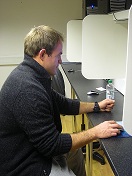
Xavier Rush hard at workSo how has your electrical training been going so far?

Busy, very busy! But good – I’ve been doing my Part P and 17th Edition, had an exam yesterday which I passed so I’m very happy about that. I wasn’t looking forward to doing a resit on Friday so I’m glad I’ve managed to avoid that. But it’s an intense course this one, and you don’t have much time to muck around. It’s intense, but its short and you get a lot of information which is great.

How have you found the balance between theory and practical learning?

You’re getting a good mix of both here. I think Martin [One of the electrical tutors] teaches it very well. I’ve enjoyed his style and the environment of working with all the other students as well. We come from all walks of life and backgrounds, but we’ve all got that one common goal of getting our qualifications. And we’re all here to learn, it’s very different to school – everyone’s here because they want to be here.

How has the electrical course compared to the kitchen fitting you were doing previously?

Kitchen fitting and carpentry is a lot more hands-on, which I’m more used to. The electrics is where you have to get the old brain working in gear. It’s been a while since I’ve had to sit in a classroom but again as I said Martin makes it interesting and mixes it up. And that’s helped us all.

Did you find you were fully prepared for the exams?

Well it’s a two and a half/three week course, so you’ve just got to make sure that you keep yourself pretty quiet over these weeks so at the end of it you get the pass mark. The first exam wasn’t bad at all but this one...it was an open book exam with the regs but it can be tricky. Its multiple choice (or multiple guess in some situations!) but I feel we covered it well in our teachings and you’ve just got to know your way around the book really.

We all passed in our class so we must have been fairly well prepared, especially when you never know what they’re going to chuck out at you. Every exam is different from everyone else’s.

So what will you be moving onto next?

I’m doing my PAT testing now, then have a nice week’s break and come back and nail my plumbing. I’m over the moon that I’m now a qualified domestic installer than can self-certify my own work. If you look at apprenticeships when I was finishing school that would have been a seven year course and even at the end you might not know as much as you’re given here. You’d have a fair bit of experience on the job but you’re in a good position to move on now and either do your own work if you feel confident enough or work for someone for a while before that.

Finally, what advice would you give to someone thinking of doing an electrical course or even completely changing careers like you have?

They need to remember that the courses are intense – you learn a lot of information so you want to make sure you go home, you get your sleep, your rest and your revision. Because you are slamming a lot of information into a small amount of time so you want to make sure you take in as much of it as possible. It’s a fun, enjoyable environment to learn in and the tutors. You’re learning from top guys so it’s been well worth the experience.

If you’ve wanted a career and want more of a hands-on trade and a change from what you’ve been doing I definitely recommend it. I certainly wouldn’t be here if I thought it was a waste of time. This is a great environment to come in and start.

We'll be catching up with Xavier Rush again after his week off, so if you have any questions you'd like to ask him please let us know via Twitter or Facebook. If you would like more information on taking the steps to change your career and become a professional tradesperson, please get in contact with one of our course advisers. Access Training offer courses in plumbing, electric, gas and construction (plastering, tiling, carpentry and painting & decoration) and they'd be happy to answer any questions. You can contact them on 088 345 7492.

Can I Do My Own Electrical Work?

Napoleon once referred to Britain as 'a nation of shopkeepers'. Probably not true in modern society, but we are still certainly a nation of something - do-it-yourselfers!

More and more people are willing to have a go at things they may have once thought impossible, taking regular visits to the local DIY shop to get parts for little jobs here and there or even working toward bigger projects such as renovating a room or building a conservatory. As DIY work becomes more popular, it raises the question: can you do your own electrical work at home? 

At Access Training, we would say when it comes to plumbing, gas and electrical jobs, such concerns are better left to the professionals!

Can I Do DIY Electrical Work?

A homeowner can legally undertake basic electrical jobs themselves, such as installing an additional socket/light or connecting a cooker to an existing connection unit, but not much more than that. Anything more complicated like installing a new shower circuit or a new cooker circuit, is considered "notifiable work" and legally requires a Part P qualified electrician.

If you have any DIY plans that require electrical work, it's always best to check what you are legally able to do before starting.

If you have any doubts on the legality or your capability to do the job safely in the first place, do NOT attempt it yourself and instead seek out the help of a qualified professional. Not only will you be ensuring that the job is done safely and properly, but you'll be saving yourself money in the long run. Hiring an electrician to fix a botched job usually ends up costing more than getting one out to do the job in the first place!

What About Building Regulations?

District councils have responsibility for ensuring that any building works meet the national Building Regulations for efficiency, safety, design and disabled access. Building Regulations must be obtained from the local council before any structural alteration is made to a home. Such regulations are easier to obtain if the homeowner can prove they are going to be using a qualified electrician to undertake the work.

Risks of DIY Electrical Work

It doesn't take much for electricity to kill - the 230 volt domestic supply running through your home is more than enough. Our bodies use electrical signals to control our organs and any excess voltage will interfere with these and can result in death.

Poorly installed electrics can also easily start fires, so by carrying out your own electrical work you could be risking losing your home and all of your possessions, just from some faulty wiring! In addition to this, if your DIY work goes against building regulations, you may find that your property is not insured and the insurance company is not legally obliged to reimburse anything.

On average, around 30 people die each year due to low voltage electrocutions and electrical burns. Plus, two and a half million people will receive a mains voltage electric shock every year, and 350,000 will receive a serious injury. Another 46 will die each year as an indirect result of faulty electrical wiring or the poor installation of electrical equipment - it's just not worth the risk!


Registers

To find an electrical contractor to undertake domestic tasks, the best place to start is often a register such as the Electrical Safety Register at www.electricalsafetyregister.com. Electricians who register with the Electrical Safety Register must meet a very high industry standard, which means that consumers who use an ESR registered contractor are guaranteed an exceptionally high standard of work. In addition, all work carried out by Electrical Safety Register contractors is guaranteed. Any deficiencies in the work carried out are resolved at no extra cost.
 

If you would like to learn more about electrical work and maintenance, you might want to consider one of the many electrical training courses we offer. These are available for both DIY enthusiasts AND people looking to gain the vital qualifications needed to make the career change to become an electrician. 

If you have any questions about our training courses, please don't hesitate to contact us using the button below.

Contact Access Training

PAGE UPDATED 24 FEBRUARY 2025

Following our plumbing glossary yesterday, Access Training have also put together a brief post covering common electrical terms that will be handy for all the aspiring electricians out there - whether they're DIY enthusiasts or aiming for a professional career.

Bonding: The process by which all metal parts in a circuit are electrically connected together and then linked to a real earth. This is done to prevent any metal component within a building becoming dangerous should it become live due to an electrical fault or damage. Any fault should cause the circuit protection device to operate and isolate the incoming mains.

BS 7671: Currently in its 17th Edition, this is the UK national safety standard for electrical installation work.

Consumer Unit: These are used to control and distribute electricity around the home. They usually contain a mains switch, fuses/circuit breakers and one or more residual current devices.

Earthing: In the event that there is a fault in the circuit, this will minimise the risk of an electric shock. It provides a path for the faulty current to flow safely to earth, causing the protective device (such as a fuse) to disconnect the circuit and stop the danger. An electrician should check that the earthing and bonding is satisfactory before starting any work.

Electrical Installation Condition Report (EICR): A report on the condition of your electrical wiring, containing an overall assessment of the safety of the wiring, observations on its condition, and a number of recommendations (in order of priority) for action (if any is required) to restore the wiring to a satisfactory condition for continued safe use. These were formerly known as Periodic Inspection Reports (PIRs).

Flush-fitted: These are electrical switched or sockets that have been installed so that their back boxes are contained within the wall or ceiling, making only the front plates visible. This often looks nicer than surface mounted connections but usually requires chasing to complete.

Miniature Circuit Breaker (MCB): These are automatic protective devices fitted into fuse boxes. They will disconnect a circuit should there be a fault or overload.

Part P: The specific section of the Building Regulations for England and Wales, which relates to electrical installations in domestic properties.

Surface-mounted: This is when switches and sockets are installed on top of a surface rather than behind it. While it is less seamless than flush-fitted installations, it causes less disruption to any decoration that surface may have.

Two Way Switch:  Switches which can be used in pairs so that either can turn a light on or off. Each switch has terminals allowing them to be linked using Three Core and Earth cable.

Of course once again this is only a very brief look at some of the things electricians come across on a daily basis, and is no substitute for proper comprehensive electrical training. If you would like to find out more about what it takes to become an electrician, earn valuable skills and the qualifications to go professional - Access Training have exactly what you need. With courses suitable for both trainees and homeowners looking to do a spot of DIY on their property, now has never been a better time to gain a better understanding of the electrical trade. Please visit the courses section of our website or alternatively get in touch with our team on 0800 345 7492.

common electrical problems

Some electrical problems are more common than others, and not everyone requires an intensive electrician course or professional qualification to deal with the issue at hand. With this in mind, here's a short list of five of the most common household electrical problems, and how they can be fixed with ease.

1. No power from an electrical socket

This common household electrical problem could be due to a number of things, some of which you will be able to fix yourself without the aid of a professional electrician. Usually, it's down to a tripped circuit breaker, or perhaps the fuse has gone.

Alternatively, it could be because of a loose wire somewhere. It's easy to check whether the circuit breaker has tripped or the fuse has blown, but if its neither of these you may need the aid of a power tester/voltage meter. If the test results in low or no power, it probably means the wiring is loose somewhere and requires further inspection.

2. Flickering lights

Again, this household electrical problem could be due to any number of reasons. Flickering lights or those that do not turn on/off when commanded are usually due to a larger problem, as is a buzzing sound you'll hear when the lights are on. The simple answer is that you might be using the wrong wattage light bulb, but it could also be a case of a bad connection. Whatever it is, in most cases this can be fixed by simply changing the bulb.

3. Half the house lights have gone off

We've probably all been here at some point. Usually, this household electrical problem can be fixed by locating your house's fuse box and flipping the switch (be sure all the light switches are off in the affected area though!). However once again it could be a short fuse or loose wiring somewhere. You might be able to locate this with your voltage tester/power meter but it's recommended that you call an electrician if needed.

4. Strange smell coming from switch/socket

When the circuit connection of an electrical device is damaged, the electricity jumps to complete the circuit. Not only creating this smell but also potentially resulting in a fire as the electricity zaps anything along the way. Electrical device arcing also indicates a serious damage to both the socket and electrical device. You'll need to unplug the appliance immediately and seek the help of a professional.

5. Hot switches

This usually occurs in dimming switches when they are running bulbs that are equal to or less than 600 Watts. When this happens, achieve the wattage required to run the dimmer properly by adding the right amount of bulbs. However, if it's the wall socket that's hot, you need to use a voltage meter to look for a high decrease or increase in voltage.

Hopefully, this post has helped you in being able to identify some of the common electrical problems you might find at home, and what you can do to fix them. However it is important to know your limitations, and NEVER attempt something that should be performed by a professional electrician.

If you would like to find out more, Access Training offer a DIY Electrical course in addition to our professional qualification courses, giving you the opportunity to practice your DIY electrical skills under the tutelage of industry professionals. For more information give us a call on 0800 345 7492.

electric shower

Firstly when you’re having problems with your electric shower don’t attempt to fix it, this is false economy – you’re much better off changing the item completely. Here are a few steps to show you how to change an electric shower. 

  • Step One - Safely take off the front cover of the electric shower box. There will be at least 1 or possibly 2 small screws holding this in place. Next, take off the front temperature and control knobs by pulling them straight off (this shouldn’t be too difficult to do). With the front cover off you should be able to see a valve on the water pipe going into the shower unit, it should have a screw slot in the middle of the valve. Turn this a ¼ turn either way and test the shower to see if this has turned off the water. You can use the control knob by temporarily re-attaching it to the shower to get the water to flow.
  • Step Two - When changing an electric shower, you must turn off the electric supply at the consumer unit (or fuse board as it’s commonly known). The fuses/trips should be marked but if they’re not, the 1 of 2 possible trips you are going to turn off will be either a 35 amp or a 45 amp depending on the Kilo-watt power of the shower. For a 35 amp fuse/trip, the shower should not be over 8.5 kilowatts. For a shower that is greater in kilowatts, the fuse/trip will be a 45 amp.
  • Step Three - The next step in changing your electric shower is to check that the electric has been turned off by either pulling the cord switch in your bathroom or the wall-mounted one outside. Run the shower and make sure that the running water isn’t warm/hot. With the electric turned off, you can put a notice hanging from the consumer unit to warn others not to turn back on.
  • Step Four - If the water is now off you can take off the water connection where it connects closest to the unit. Undo the electric cable connections and remove the unit, remembering to replace like-for-like in the kilowatt power rating of the unit (this rating can be found somewhere on the old unit, and on the front cover box of the new one).
  • Step Five - When you have connected the new unit to the electric cable and to the water supply, check the water flow through the unit first, then with the cover on the unit you can turn the electric fuse/trip back on. Go back to the unit and turn the wall-mounted switch or pull the cord on, turn up the thermostatic control on the unit and the water control knob to on. Your new shower should be working, but with the new shower unit you will have the manufacturer’s instructions in the box. Follow these carefully, and it should be safe for you to install.

- Mark Lewis

 Would you like to learn more about the kind of DIY plumbing tasks you can perform yourself around the home? Access Training offers a number of bespoke plumbing courses for both DIY enthusiasts and those looking for a career as a professional plumber. You'll have access to our state-of-the-art training facilities and be taught by fully-trained plumbers with many years' experience in the trade. To find out more, give us a call on 0800 345 7492.

Get in touch to learn more about our training courses!

First Name *
Surname *
Telephone Number *
E-mail address *
Ask A Question *
 
Security Character Security Character Security Character Security Character Security Character Security Character
Enter Letters (No Spaces) *