Featured Article

Training to become a gas engineer - how long does it take to become a fully qualified gas engineer

There are plenty of opportunities for Gas Safe engineers in Britain right now, but it can take a long time to get qualified via the 'traditional' training routes like apprenticeships and college courses. It can take at least six months - and often far longer - to become a gas engineer this way.

Fortunately for budding gas engineers and the homeowners who rely on their services, apprenticeships are no longer the only way to become a qualified heating engineer. Over the last few years, intensive gas training courses have soared in popularity throughout the UK, with an increasing number of career changers opting for the fast-track route and attaining Gas Safe status in just a few months.

Some programmes even allow students the flexibility to learn part time so as to accommodate other commitments. This is great news for would-be tradespeople who need to stay in work and/or support a family while completing their gas training.


How long does it take to become a fully qualified gas engineer? 

The UK heating industry has been struggling with a serious skills shortage for some time now. Gas Safe engineers are in very high demand; many have found themselves forced to turn down jobs because there's simply no room in their tightly-packed schedules.

So the country needs more gas engineers, and it needs them now. There are many options available to an aspiring gas engineer here in the UK. The push for apprenticeships in previous years, although successful in introducing many young people to the industry, has spread the narrative that full qualification takes years. Often forgotten is the private training industry, a more costly upfront investment but providing rewards much faster in the form of employment and career progression.

Access Training's fast-track gas courses allow you to learn your new trade and get qualified in a matter of months. This is probably the fastest way to become a gas engineer.


Why become a gas engineer?

Here are three good reasons to choose this career path:

  • Gas Safe engineers can make a lot of money - according to Totaljobs, the average salary for a gas engineer in the UK is £37,500

  • Once you're Gas Safe registered, you can start your own heating company and enjoy the freedom that comes with being your own boss

  • As mentioned above, qualified gas engineers are in high demand - so you're very unlikely to find yourself short of work!


Gas Engineer Courses >


How to become a gas safe engineer

Here's a quick step-by-step overview of how to become a Gas Safe engineer:

  1. Your gas training journey begins in the classroom, where you will learn how gas appliances work and familiarise yourself with important gas safety legislation.

  2. Next, you will move on to the practical portion of your gas training course, mastering the skills that you'll use every day once you're a qualified gas engineer.

  3. Your Gas Safe course will culminate in an initial ACS assessment. At the very least, you will need to pass a CCN1 (Core Gas Safety) assessment, but you can choose to add further qualifications - such as CKR1 for gas cookers or CENWAT1 for central heating boilers - if you would like to work on a wider range of gas appliances.

  4. Once you have passed your initial ACS assessment, you will be eligible to join the Gas Safe Register (previously CORGI). At that point, you can officially call yourself a Gas Safe engineer - congratulations!

  5. In order to remain on the Gas Safe Register, you must renew your qualifications periodically. This involves attending an ACS reassessment.

Note that we now offer blended training courses that combine online learning with in-centre training sessions. This means that you can commence your Gas Safe training online from the comfort of your own home!

In our virtual classroom sessions, you will learn the fundamental theory that every gas engineer needs to master - not only will you be able to ask questions and interact with your tutor as normal, you will also be able to rewatch each class for revision purposes. Contact Access Training to find out more.


Become a gas engineer with our intensive training courses

If you wish to become a Gas Safe engineer as soon as possible, we recommend the Professional Gas Engineer Course from Access Training. This is a flexible gas training course that's open to everyone - no prior heating or plumbing experience is required to enrol.

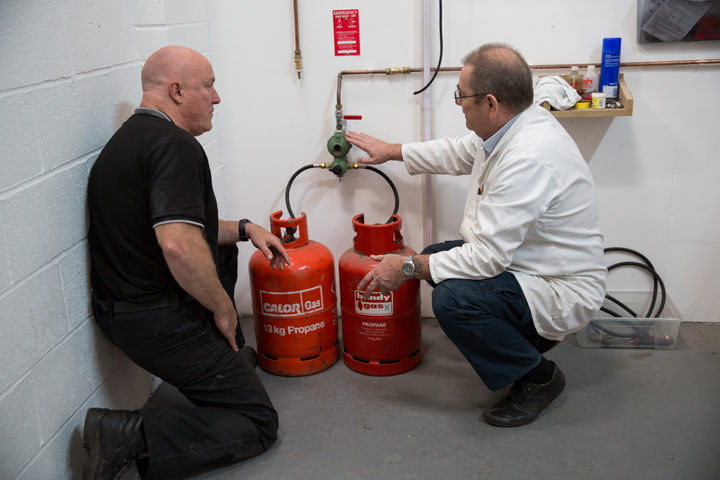
This intensive gas course is specifically designed to earn you the qualifications needed to become a professional gas engineer, getting you ready for work within the shortest possible timeframe. All the basics (including gas safety legislation and standards) are covered in online classes; after that, you will attend our fully-equipped training centre for the practical portion of your course. Our expert tutors will make sure you can do everything that's expected of a gas engineer - such as pipework, tightness tests, and repairing a variety of gas appliances.

Our Professional Gas Engineer Course culminates in the ACS gas assessment, which tests students on everything they've learned. If you pass this assessment, you will receive the ACS Certificate - this enables you to join the Gas Safe Register, a legal requirement for gas engineers in the UK.

We also offer a Premier Gas Engineer Course, which includes everything mentioned above plus the Level 2 Diploma in Plumbing. Completion of this course allows you to conduct plumbing as well as gas work, which is a useful advantage for a professional gas engineer to have.

Browse Our Gas Safe Courses >

For more information on how to become a gas engineer, our fast-track gas courses, the qualifications we offer, or how long it will take to complete your training and become a Gas Safe engineer, please do not hesitate to get in touch with the Access Training team.

Last updated 5th July 2022

READ ARTICLE

Retraining for a new career

If your current job has become frustrating, uninspiring, or just plain dull, then it may be time to consider retraining for a new career. You can retrain at 20, 30, 40 and beyond - regardless of your age, it's never too late to change your path!

While lucrative careers that require no qualifications or prior training do exist, such opportunities are relatively few and far between, so it's generally a better bet to undertake some form of retraining before embarking on a new career path. The best careers to retrain for can take many forms: some people choose to go back to university, or even to a sixth form college to retake their A-levels. Others enrol on apprenticeships or vocational courses.

Of course, the best retraining route for you depends very heavily on what kind of career you're looking to pursue. Here are some of the questions you should be asking...


What career should I retrain for?

Typing 'best careers to retrain for' into Google produces all sorts of different answers to this question. One website tells you to become a chef; another recommends logistics, firefighting and air traffic control. There doesn't seem to be any real consensus as to what the best career path is, and while that's perfectly understandable - everybody is different, and one person's dream job is another person's nightmare - we'd like to make the case today for learning a trade and retraining as a tradesperson.

There are countless opportunities for qualified tradespeople in the UK right now. The government made house building a key focus of their latest budget, and if their targets are to be met, the country will need a lot more workers who are capable of building new properties and providing them with water and electricity. And that need is set to become even greater over the coming years - according to the Telegraph, the UK's construction industry workforce will decrease by 20 to 25% in the next decade. New, skilled workers are needed to fill that gap, so if you're weighing up prospective career options, getting into the trade could well be a very good retraining choice indeed.


Retraining options for budding tradespeople

The government's stated goal is to build 300,000 homes a year. Lots of different skills are required to construct a habitable modern home; bricklayers and carpenters will be in very high demand, of course, but so will the following people:


Electricians

Homes need electricity, and only a qualified electrical engineer can legally perform electrical installations. Why not retrain as an electrician with the help of Access Training?

Electrical training courses >


Plumbers

Homes also need water, and there are many jobs for a plumber to do within a house building project. Sinks, taps, baths, toilets, showers, dishwashers...the list goes on. We offer a variety of plumbing courses if you'd like to retrain as a plumber.

Plumbing courses >


Gas Engineers

Many plumbers choose to also train as gas engineers and join the Gas Safe Register, as this enables them to carry out a wider variety of tasks (e.g. boiler installation). This is a rewarding and challenging profession for people looking to retrain.

Gas training courses >


Kitchen Fitters

Professional kitchen fitters are required to have a strong grasp of numerous specialist skills, from measuring and marking up to cutting worktops and installing cooker circuits. Retraining for a career in kitchen fitting will provide you with lots of lucrative work, and might even come in handy at home!

Kitchen fitting courses >


Want to find out more about our best retraining options? If you're ready to start retraining for your dream career, please contact Access Training Academies today.

Training to become a gas engineer - how long does it take to become a fully qualified gas engineer

There are plenty of opportunities for Gas Safe engineers in Britain right now, but it can take a long time to get qualified via the 'traditional' training routes like apprenticeships and college courses. It can take at least six months - and often far longer - to become a gas engineer this way.

Fortunately for budding gas engineers and the homeowners who rely on their services, apprenticeships are no longer the only way to become a qualified heating engineer. Over the last few years, intensive gas training courses have soared in popularity throughout the UK, with an increasing number of career changers opting for the fast-track route and attaining Gas Safe status in just a few months.

Some programmes even allow students the flexibility to learn part time so as to accommodate other commitments. This is great news for would-be tradespeople who need to stay in work and/or support a family while completing their gas training.


How long does it take to become a fully qualified gas engineer? 

The UK heating industry has been struggling with a serious skills shortage for some time now. Gas Safe engineers are in very high demand; many have found themselves forced to turn down jobs because there's simply no room in their tightly-packed schedules.

So the country needs more gas engineers, and it needs them now. There are many options available to an aspiring gas engineer here in the UK. The push for apprenticeships in previous years, although successful in introducing many young people to the industry, has spread the narrative that full qualification takes years. Often forgotten is the private training industry, a more costly upfront investment but providing rewards much faster in the form of employment and career progression.

Access Training's fast-track gas courses allow you to learn your new trade and get qualified in a matter of months. This is probably the fastest way to become a gas engineer.


Why become a gas engineer?

Here are three good reasons to choose this career path:

  • Gas Safe engineers can make a lot of money - according to Totaljobs, the average salary for a gas engineer in the UK is £37,500

  • Once you're Gas Safe registered, you can start your own heating company and enjoy the freedom that comes with being your own boss

  • As mentioned above, qualified gas engineers are in high demand - so you're very unlikely to find yourself short of work!


Gas Engineer Courses >


How to become a gas safe engineer

Here's a quick step-by-step overview of how to become a Gas Safe engineer:

  1. Your gas training journey begins in the classroom, where you will learn how gas appliances work and familiarise yourself with important gas safety legislation.

  2. Next, you will move on to the practical portion of your gas training course, mastering the skills that you'll use every day once you're a qualified gas engineer.

  3. Your Gas Safe course will culminate in an initial ACS assessment. At the very least, you will need to pass a CCN1 (Core Gas Safety) assessment, but you can choose to add further qualifications - such as CKR1 for gas cookers or CENWAT1 for central heating boilers - if you would like to work on a wider range of gas appliances.

  4. Once you have passed your initial ACS assessment, you will be eligible to join the Gas Safe Register (previously CORGI). At that point, you can officially call yourself a Gas Safe engineer - congratulations!

  5. In order to remain on the Gas Safe Register, you must renew your qualifications periodically. This involves attending an ACS reassessment.

Note that we now offer blended training courses that combine online learning with in-centre training sessions. This means that you can commence your Gas Safe training online from the comfort of your own home!

In our virtual classroom sessions, you will learn the fundamental theory that every gas engineer needs to master - not only will you be able to ask questions and interact with your tutor as normal, you will also be able to rewatch each class for revision purposes. Contact Access Training to find out more.


Become a gas engineer with our intensive training courses

If you wish to become a Gas Safe engineer as soon as possible, we recommend the Professional Gas Engineer Course from Access Training. This is a flexible gas training course that's open to everyone - no prior heating or plumbing experience is required to enrol.

This intensive gas course is specifically designed to earn you the qualifications needed to become a professional gas engineer, getting you ready for work within the shortest possible timeframe. All the basics (including gas safety legislation and standards) are covered in online classes; after that, you will attend our fully-equipped training centre for the practical portion of your course. Our expert tutors will make sure you can do everything that's expected of a gas engineer - such as pipework, tightness tests, and repairing a variety of gas appliances.

Our Professional Gas Engineer Course culminates in the ACS gas assessment, which tests students on everything they've learned. If you pass this assessment, you will receive the ACS Certificate - this enables you to join the Gas Safe Register, a legal requirement for gas engineers in the UK.

We also offer a Premier Gas Engineer Course, which includes everything mentioned above plus the Level 2 Diploma in Plumbing. Completion of this course allows you to conduct plumbing as well as gas work, which is a useful advantage for a professional gas engineer to have.

Browse Our Gas Safe Courses >

For more information on how to become a gas engineer, our fast-track gas courses, the qualifications we offer, or how long it will take to complete your training and become a Gas Safe engineer, please do not hesitate to get in touch with the Access Training team.

Last updated 5th July 2022

Electrician career

Thinking of changing careers? Wondering if you'd enjoy life as a professional electrician? Read on to find out just what this job has to offer.

Becoming an electrician can be a very tempting prospect, especially if your current job keeps you cooped up in an office all week. Electricians spend their working days out and about, travelling from one job to the next, fixing people's electrical problems and helping them to get their appliances up and running again.

If this sounds like a pretty rewarding way to make a living, well, it is! Here's a closer look at why electrical work may be a good career for you to pursue:

  1. How much do electricians make?
  2. What hours do electricians work?
  3. How difficult is it to find work?
  4. How do you become a qualified electrician?


How much do electricians make?

According to the Office of National Statistics, the median salary for a UK electrician in 2016 was £30,765 per year. This was slightly higher than the figure for the previous year (which means that electricians' salaries are going up over time).

The same ONS survey found that electricians are the best-paid tradespeople of all, earning more on average than other professionals such as plumbers, carpenters, bricklayers and plasterers.

READ MORE: What is an Electrician's Salary?


What hours do electricians work?

So how hard does an electrician have to work to earn upwards of £30k a year? Obviously, there's no set working week when you're a self-employed electrician - you can take on as many or as few jobs as you choose - but it goes without saying that the more work you do, the more money you'll make.

Depending on how much work you find (and how much of it you choose to take on at once), you may well find yourself doing 50-60hrs per week. However, it is more than possible to live comfortably as an electrician working significantly fewer hours than that.


How difficult is it to find work?

The UK is still suffering from something of a trade skills shortage, meaning that there simply aren't enough tradespeople available to do all the jobs that need doing around the country.

This means that electricians (as well as plumbers, bricklayers, etc.) are in very high demand right now, with many tradespeople finding that they're able to command a much higher price for their services than in the past. Interestingly, the result of last year's EU referendum seem to have exacerbated the skills shortage further, and UK electricians are sorely needed to replace the EU workers upon the trade industry relied until recently.


How do you become a qualified electrician?

If the perks of professional electrical work sounds too good to pass up, the next question you'll ask is probably 'what's the next step?'

View accredited electrician courses >

Electricity, of course, can be very dangerous, and so would-be electricians are required to hold a number of qualifications before carrying out any work. Here are the qualifications you MUST have:

  • Part P Domestic Installer
  • 17th Edition Electrical Regulations

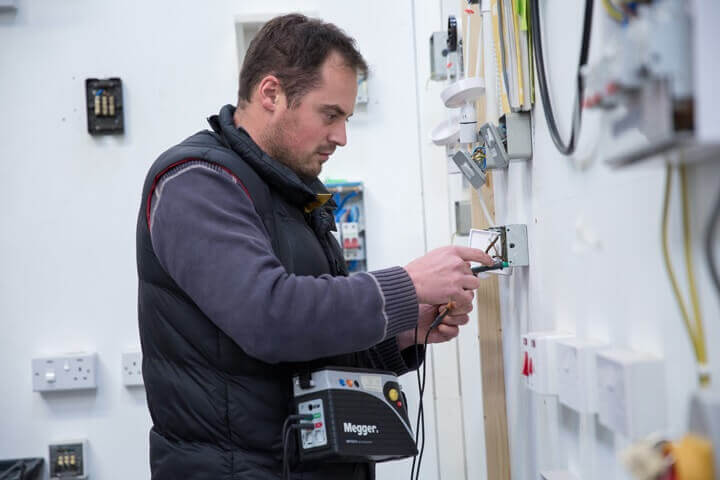
These two certifications are included in our Essential Electrical Course. If you wish to learn more advanced skills and expand the range of jobs that you'll be able to undertake, you may wish to investigate our Professional Electrical Course and our Premier Electrical Course.

All of these training programmes are open to all, with no prior electrical knowledge or experience required. If you would like to train to become an electrician, please contact Access Training today!

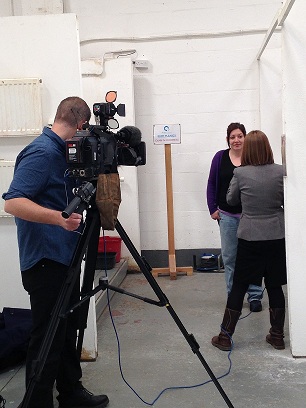
It seems our Tuesday blog post, entitled "Female Tradespeople on the Rise", was perfectly timed as yesterday Access Training received a visit from none other than Sky News. Working on a piece looking at the growth of females in trade careers such as plumbing, gas, carpentry, painting/decorating and more, Sky had a look around our centre before filming some of our woman trainees hard at work and then briefly interviewing them on their thoughts on women in the trade. Also interviewed as our very own carpentry tutor Gary, giving some of his thoughts on the differences he's seen between men and women working in the trade.

With women tradespeople now reportedly making up nearly 6% of the industry's overall workforce, the media are finally paying more attention to female tradespeople and why they are just as good (if not better) for the job as men are. The Sky News report won't just focus on women training here at Access, but also speak with women who have been working in the business for sometime.

Take a look below to see some of the photos we took from yesterday's filming:

The short piece is set to go out on Sky News sometime this weekend (we'll update you via Twitter and Facebook once it is confirmed) and will likely be shown repeatedly throughout the day. Be sure to watch out for us and if you're thinking of training towards a trade career - give us a call on 0800 345 7492! You'll then be able to get in contact with our course advice team, learn more about the courses we offer and even come visit our training facilities. As well as becoming a professional tradesperson quickly and effectively, who knows - maybe you'll end up on TV too!

Every so often its good for this blog to break away for the wealth of industry news going on in the world, and there's never a better reason for it than to share our own students' success stories. Today we've got some REALLY good news to share, as we congratulate last month's electrician students on completing their 2395 Electrical Inspection and Testing courses with a 100% pass rate!

The City & Guilds 2395 Periodic Inspection & Testing is renowned for being a notoriously difficult qualification to achieve. It is aimed at experienced electricians (and thus there are specific criteria candidates need to meet before they can even attempt the exam) who wish to gain further knowledge in the inspection, testing and certification of electrical installations. The assessment itself consists of the following three parts;

  • A multi-choice online exam
  • A closed book written exam
  • A practical exam

Upon successful completion, candidates will be able to complete the Electrical Condition Installation Report. However the difficulty of the course is reflected in the pass rate, with the last Chief Examiner's Report (dated December 2013) showing a national pass rate of 47%. Nevertheless, Access Training has remained confident in its ability to deliver the test, promising candidates that against the odds they too will be able to gain this highly sought after qualification. And our results for February prove that we weren't wrong.

100% of our entrants passed the exam last month, and our sister centre The Plumbing Academy wasn't far behind with four out of five of their candidates also achieving this prestigious qualification. Very few, if any, centres have achieved such pass rates in the past, collectively making Access Training Academies among the top training centres in the country for this qualification. But this isn't our success - a huge congratulations to all our successful students and all the best with your new qualification and career prospects.

Centre manager Tony Maus said, "When you compare the national pass rate with our own in both centres the results just speak for themselves. This is fantastic news and well done to all our successful candidates. They've earned it."

If you're an experienced electrician looking to further their career and skillset, have you thought about giving the 2395 qualification a go yourself? At Access we are determined to maintain this excellent pass rate well into the future and look forward to you being a part of it, so give us a call on 0800 345 7492 to find out more.

ELECSA and NICEIC operators NAPIT and Certsure have come together to create a single place consumers can go to find a fully qualified electrician. This easily identifiable mark will cover all full scope Part P registered electricians and is planned to roll out this year.

The two associations both created their own individual registers last year, but have since realised the advantages of creating a single one to avoid confusion. In addition to this, both feel that the attention given to the launches has proved a distraction from key issues in the electrical industry - namely safety and quality. To overcome this, NAPIT and Certsure met back in November to discuss the way forward in terms of promoting competent, qualified electricians.

The proposal that has been put forward is anticipated to include all licensed Electrical Competent Person Scheme Operators in England and Wales who are approved by the DCLG to run an electrical certification scheme, who have been said to be "happy with the plans" in principle. The schemes will continue to operate individually in accordance with current Building Regulations, however they will now also promote the new quality mark as well as their own.

Emma Clancy, Chief Executive Officer of Certsure, said consumers will now benefit from a single point of reference, making it far easier for consumers to locate a registered electrician in their area. NAPIT Chief Executive Michael Andrews added that the new register will also "ensure that electrical installers continue to be able to take advantage of the choice and value for money that comes as part and parcel of healthy competition in the marketplace"

When becoming a fully qualified electrician, gaining your Part P qualification and joining a Competent Persons Scheme is an incredibly important step to take. It ensures consumers that you are fully qualified and able to perform electrical installations, setting you apart from the so-called "cowboy builders" that plague the industry. Not only that, but a Part P qualification allows electricians to self-certify their own work. This means you can sign off on any installations without having to inform your local building authority - saving you a considerable amount of money in inspection fees.

The Part P qualification, along with all electrical qualifications needed to become a full-time electrician, is available as an intensive course from Access Training Academies. If you would like the steps to become a fully-fledged electrician, take a look at the courses we have on offer and give us a call on 0800 345 7492 today.

Having fully completed his professional electrician course, ex-rugby player and Access Academies student Xavier Rush has now turned his attention towards retraining in a second trade and begun a plumbing training course with us. We caught up with him during the fourth week of his six week course to find out how he's getting on and how the plumbing training has differed from his previous experience with the electrical training course. One thing's for sure, it's a very different experience to playing rugby for both the All Blacks and Cardiff Blues...

How are you finding the change from electrical work to a plumbing course?

It’s definitely the most practical I’ve done so far! There was a lot of theory with the electric but theory there is here is probably a lot easier to grasp. But then it’s also far more hands on too. It’s very busy – we’ve been working with low carbon steel and a lot of copper as well. I fitted a bathroom last week which was enjoyable – it’s nice to step back and see the results sometimes.

But a lot like the electric these are intense course and you pick up a lot of information and skills quickly. It helps that you’re learning from people who’ve been in the industry a long time.

Had you done any plumbing before starting the course?

No, before this I didn’t have a thing – I couldn’t even stop a leak. You’ve got to pick it up quite quickly as there’s no one there holding your hand. Once you’ve got an understanding of it all it gets a lot easier. It’s just knowing what fittings do what and what products you’re working with, that sort of thing.

Have you found anything especially difficult over the last four weeks?

I suppose it just takes you a while before you get competent with everything really. Nothing is truly mind boggling. There were a few issues fitting a bath, but it’s the kind of stuff you can get your head around.

How have the tutors been?

They’ve been great and a really big help this week especially. They don’t baby you at all, but make sure to tell you exactly where you’ve gone wrong – which is exactly what they need to do. If you were working in someone’s house and you spring a leak and their lounge ceiling falls in you’re going to be in trouble. So you’ve just got to know. It’s just like anything – the more you practice you have, the better you get. Its good being here because if you’re going to make mistakes make them here, that way I can waste your copper rather than mine!

How have you found the studying at home element of the course?

Like I said, you are picking up a lot of information in a short time so while you’re here you’ve really got to apply yourself for the six weeks. There’s a lot of going home, revising, getting ready for exams because if you don’t do the homework you don’t get the passes. You have got to read the book and retain that information. I’ve had many a late night drinking coffees at Starbucks looking like a bit of a geek.

And finally, how much time do you have left here before you’re all done?

I’ve got two more weeks after Christmas. It’s been an intense four weeks so it’ll be nice to have a bit of a break and then come back and hit it again. Because we’ve done so much over the last few weeks and put so many fittings together you should be able to retain a lot of the information. And then after that that’ll be it for me…for now! I might come back and do the one week electrical testing course just to freshen up on that. But it’s just brilliant to come here and reskill so quickly as an older person. I did carpentry when I left school but to think now I’ve got plumbing and electric qualifications backing that up. And to feel confident with that within ten weeks is berserk really – they’re skills you’ve obviously got for life.

I can look at stuff in houses now and understand it. Obviously it doesn’t give you all the experience – you’re still going to go out there and make mistakes but it’s given me a really good grasp of both industries, both the electric and the plumbing.

As Xavier approaches the end of his Access Academies training, we'll be talking to him again in the new year to discuss his overall experiences and his plans for the future. In the meantime if you have any questions you'd like to ask him about changing careers and retraining in a new trade, please let us know over on Twitter or Facebook. If you yourself would like more information on Access' extensive range of trades training courses (also including gas engineering, carpentry, bricklaying, plastering, tiling and painting/decorating), please get in contact with one of our course advisers on 0800 345 7492.

Via InstallerOnline

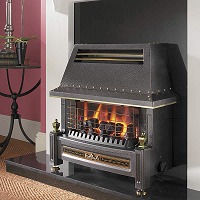
Despite the advances in electric fires and other forms of household heating, gas fires are still proving to be the number one choice for homes. So if you're looking to go out and get your gas certificate to become a qualified engineer, you'll be pleased to know that business is just as good as ever.

As well as the authenticity and flame effect which prove highly popular among the public, gas is still the cheapest fuel to run. On average, 1kW of gas supplied by British Gas costs just 4.662p (including VAT) compared to nearly 14.259p (including VAT) for 1kW of electricity - a number that seems to only be going up these days. Not only that, running a gas fire is actually more beneficial to the environment too, as it delivers half the CO2 emissions of an electric fire.

Gas fires are also far more efficient than they were back in the 80s, with developments in technology making them capable of delivering heat efficiencies of over 80% and heat outputs of 4.0kW - more than enough to heat your living room! But most of all a gas fire is reliable - if by chance your boiler were to break down over the winter (say, due to condensation freeze), you'll still be able to keep safe and warm until everything is back up and running.

Gas heating is just as vital now as it was 20 years ago, and Britain will continue to need engineers who have received the proper gas training. At Access Training you'll be able to learn all about the gas trade on one of our intensive training courses, eventually going on to complete a guaranteed work placement and subsequent ACS assessments. After that you'll be able to join the Gas Safe register and legally work on all forms of gas installation and appliance in the UK. Reckless gas maintenance can cost people their lives, so we're sure to make sure ALL of our students are training to the required professional standard.

To find out more give Access Training a call on 0800 345 7492.

Is the popularity of a good relaxing bath in decline?

A new study from online bathroom retailer UK Bathrooms seem to think so, as their research has found order trends and customer feedback for baths has had a 54% decrease in the last year. On the other hand, the popularity of showers seems stronger than ever which has seen a staggering 72% increase. The study even found that three quarters of British homeowners would choose to install a shower in their home over a bath.

The survey looked at 1342 homeowners in the country, and was part of ongoing research into the opinion about bathroom styles. Respondents were also revealed the reasons why they considered showers to be superior to baths - 46% considered it much quicker, while 34% also added that a shower left them feeling much cleaner than a bath did.

Moving on to bathrooms themselves, 40% of respondents only had showers in their bathrooms, with 28% only having a bath and 32% owning both. If they were to move or renovate their bathrooms, 78% said that installing a shower was of much higher priority than a bath. Why? 51% considered showers to be the speedier option, while 37% also preferred it because showers take up much less space than a bathtub.

Whether you're a bath or shower person (or both!), the winner here is still bathroom installers and plumbers in general. Whether your customer wants a shower or bath (or again, both!) installed, a fully qualified plumber is the only man for the job. If you're interested in specifically going into bathroom fitting, Access Training also offer specialised bathroom fitting courses to provide trainees with everything they'll need to know to perform the job to a professional standard.

To find out more give Access a call on 0800 345 7492 today.

Get in touch to learn more about our training courses!

First Name *
Surname *
Telephone Number *
E-mail address *
Ask A Question *
 
Security Character Security Character Security Character Security Character Security Character Security Character
Enter Letters (No Spaces) *