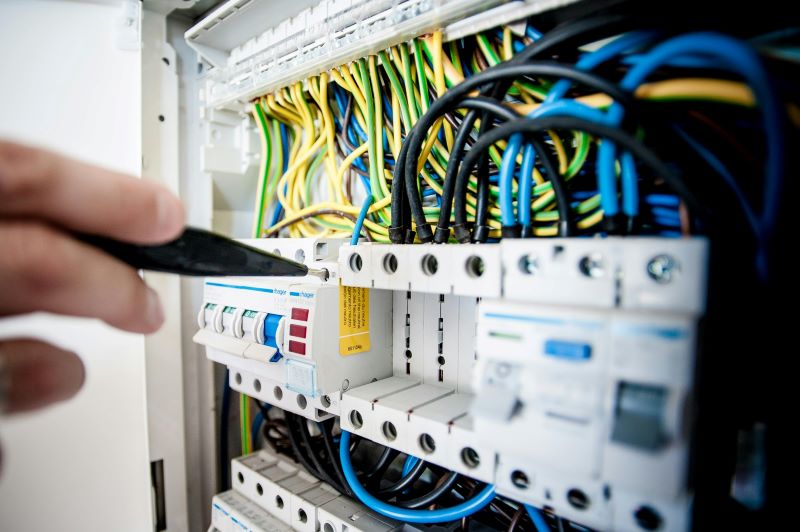
A UK engineer has created innovative new software to help plumbers with dyslexia, after he noticed a need for the product when aiding plumbers with heat-loss calculations. The software, called Heat Engineer, is designed to enable plumbers to work out calculations of heat-loss quickly and efficiently, without the need for external help.

Although this is hugely beneficial for plumbing as whole, the fact that it can be adapted especially for people who suffer from dyslexia means that it will not only improve and simplify the day-to-day lives of current tradespeople, but will also pave a more inviting pathway for the plumbers of the future. To help combat the difficulties experienced by plumbers with dyslexia, the app allows them to change the colour, size and font of the text, as well as other elements, allowing them to adapt it to fit their particular needs. This is a massive step forward not only for plumbing-specific technology, but for apps in general, as it directly combats a common difficulty that isn't often awarded much attention in mainstream culture.

Another encouraging aspect of this development, is that it has the potential to draw more people to the profession, due to the fact that they will not feel intimidated or held-back by their struggles with dyslexia. In fact, individuals with the problem can often find themselves thriving in a hands-on career such as plumbing, which means that the industry's talent pool will also be all the better for it.

At Access Training, we aim to take on a variety of candidates regardless of their background or experience level, an approach we believe is essential in ensuring that we create a compassionate and diverse pool of trade professionals. Our experienced tutors have years of professional experience, and are able to offer a flexible programme of work to suit the candidate's individual needs. Due to our student to tutor ratio, you will also be given the opportunity to have one-on-one supervision and guidance, which is ideal for candidates how may find some of the written aspects of the courses more complicated. 

If you would like to become a plumber, and feel that Access Training's courses could be for you, then please feel free to get in touch with us today!  As we mentioned previously, we are dedicated to providing a flexible service, and would be happy to discuss any concerns or requirements you may have.

For the latest updates in the world of trade professions and about our courses, follow us on Twitter!

Constant advancements in heating technology mean that it's crucial for plumbers and gas engineers to ensure that their skills are always up to date with the latest changes and developments. Plumbing professionals must ensure that they are qualified to work on a variety of systems, in order to guarantee a safe and efficient service for themselves and their customers.

These days, most new properties have unvented hot water storage systems, which are far more complicated and have more parts than older, open-vented systems. Even if you have a wealth of experience with other types of hot water systems, a lack of knowledge in this particular area could soon cause you to come unstuck if you attempt to work on an unvented system without the proper training.

How to get qualified

Here at Access Training, we deliver an accredited Unvented Hot Water Storage Systems course for plumbers and heating engineers.

This training package will equip you with all the relevant skills and knowledge needed to install and maintain modern hot water systems. It will also familiarise you with the G3 Building Regulations, which you will need to follow when working on hot water storage systems. At the end of the course, you'll gain a qualification that allows you to work on unvented systems (as well as solar thermal hot water installations).

Unlike some of our other plumbing courses, this course is specifically designed to suit experienced plumbers and heating engineers who wish to expand and update their skill set. When you successfully complete the course, you will be supplied with an ID card that identifies you as being qualified to deal with this type of work, providing peace of mind for your customers.

Unvented Hot Water Storage Systems Course - Book Your Place Now >

To see our full range of plumbing training packages, please visit our Plumbing Courses page. Feel free to get in touch if you have any questions about any of our courses.

Can I Do My Own Electrical Work?

Napoleon once referred to Britain as 'a nation of shopkeepers'. Probably not true in modern society, but we are still certainly a nation of something - do-it-yourselfers!

More and more people are willing to have a go at things they may have once thought impossible, taking regular visits to the local DIY shop to get parts for little jobs here and there or even working toward bigger projects such as renovating a room or building a conservatory. As DIY work becomes more popular, it raises the question: can you do your own electrical work at home? 

At Access Training, we would say when it comes to plumbing, gas and electrical jobs, such concerns are better left to the professionals!

Can I Do DIY Electrical Work?

A homeowner can legally undertake basic electrical jobs themselves, such as installing an additional socket/light or connecting a cooker to an existing connection unit, but not much more than that. Anything more complicated like installing a new shower circuit or a new cooker circuit, is considered "notifiable work" and legally requires a Part P qualified electrician.

If you have any DIY plans that require electrical work, it's always best to check what you are legally able to do before starting.

If you have any doubts on the legality or your capability to do the job safely in the first place, do NOT attempt it yourself and instead seek out the help of a qualified professional. Not only will you be ensuring that the job is done safely and properly, but you'll be saving yourself money in the long run. Hiring an electrician to fix a botched job usually ends up costing more than getting one out to do the job in the first place!

What About Building Regulations?

District councils have responsibility for ensuring that any building works meet the national Building Regulations for efficiency, safety, design and disabled access. Building Regulations must be obtained from the local council before any structural alteration is made to a home. Such regulations are easier to obtain if the homeowner can prove they are going to be using a qualified electrician to undertake the work.

Risks of DIY Electrical Work

It doesn't take much for electricity to kill - the 230 volt domestic supply running through your home is more than enough. Our bodies use electrical signals to control our organs and any excess voltage will interfere with these and can result in death.

Poorly installed electrics can also easily start fires, so by carrying out your own electrical work you could be risking losing your home and all of your possessions, just from some faulty wiring! In addition to this, if your DIY work goes against building regulations, you may find that your property is not insured and the insurance company is not legally obliged to reimburse anything.

On average, around 30 people die each year due to low voltage electrocutions and electrical burns. Plus, two and a half million people will receive a mains voltage electric shock every year, and 350,000 will receive a serious injury. Another 46 will die each year as an indirect result of faulty electrical wiring or the poor installation of electrical equipment - it's just not worth the risk!


Registers

To find an electrical contractor to undertake domestic tasks, the best place to start is often a register such as the Electrical Safety Register at www.electricalsafetyregister.com. Electricians who register with the Electrical Safety Register must meet a very high industry standard, which means that consumers who use an ESR registered contractor are guaranteed an exceptionally high standard of work. In addition, all work carried out by Electrical Safety Register contractors is guaranteed. Any deficiencies in the work carried out are resolved at no extra cost.
 

If you would like to learn more about electrical work and maintenance, you might want to consider one of the many electrical training courses we offer. These are available for both DIY enthusiasts AND people looking to gain the vital qualifications needed to make the career change to become an electrician. 

If you have any questions about our training courses, please don't hesitate to contact us using the button below.

Contact Access Training

PAGE UPDATED 24 FEBRUARY 2025

As is the want of Murphy’s Law, DIY and plumbing disasters always seem to happen at the worst possible times. Whether late in the evening, in the early hours of the morning or during a bank holiday, a plumbing problem will always manifest itself with particularly poor timing.  And at specialist times like this, when immediate action is frequently necessary, many professional plumbers, who have trained on a plumbing course, will charge extortionate rates. 

Sometimes however, the problem is a simple one that you can fix yourself without involving an expensive third party. Here are some particularly straightforward plumbing problem and their simple solutions:

Unclogging a drain

When you’ve just eaten Christmas dinner or a special birthday dinner and then you find the sink to be critically blocked, the thought of doing the dishes in the bathtub fills you with dread. Usually caused by lots of bits of food or grease, a drain can be unblocked using a humble plunger or by using an instrument to poke the blockage through. 

Noisy pipes

There are some homes where particularly noisy plumbing resembles a small modernist concerto. If your pipes are banging or squeaking then it probably means they have come loose from the straps or cushions that affix them to the wall, so simply place a new piece of material around the pipes. 

Hammering pipes

When pipes start to hammer, however, there’s a different solution. Hammering pipes means that the air chambers in the pipes are empty – this can be fixed by turning the water off at the mains, then opening all the faucets to drain the entire system. Afterwards, turn off the faucets and let the water back on. The chambers should refill with air and the hammering will stop.   

Running toilet

This is one of the most common problems that people will call a plumber out for, but it can be very simply solved, usually by replacing a faulty flapper or ball assembly. However, in some cases, you may need to clean mineral deposits from the tank itself with an effective combination of vinegar, baking soda and boiling water. 

If you find that you have a natural passion for plumbing and would like to train professionally, or are simply interested in learning the ropes, Access have a wide variety of plumbing courses available. Learn more by calling 0800 3457492 today. 

Did you know that this week is national back week? From today until the 12th of October, National Back Week aims to highlight how important it is for trade professionals, electricians and plumbers to really look after their back and ensure they’re fighting fit and ready to give their all to their job.

Back pain is the second most common cause of long-term illness in the UK and without a healthy back it’s very hard to do anything – and even more so if you’re constantly on the move and performing highly practical tasks for your job. Whether you’re lifting, driving, stretching, climbing or painting, without a healthy back it is much harder to do your job properly.

That’s why National Back Week was launched by BackCare, the charity for healthier backs, to raise awareness of keeping your back in tip-top shape. But what steps can trades people take to ensure a healthy back?

Keep moving

Like all muscles, the tendons and sinews that make up your back get stronger the more often they’re used. So, a great way of keeping back pain at bay is by staying active. Luckily, as a tradesperson, you’re likely to be frequently on your feet, bending, lifting and using your back muscles, so they are likely to be pretty strong. If you have injured your back, remember that strengthening those muscles is the key to regaining your health, so try low-impact exercise like swimming.

Sit well

Although you’re likely to be frequently off your feet, many back problems arise as a result of poor posture while seated. So when you’re doing paperwork or relaxing at home, ensure that your back is straight and well-supported. Plus, be sure to frequently adjust your sitting position, as sticking to the same posture for a long period of time could lead to a repetitive strain injury.

Lift safely

Many back injuries occur as a result of lifting something that’s too heavy for you to cope, and it’s important to remember that no bravado and man-points can mask the agony of a bad back. So, when you’re next confronted by a package that’s too heavy to lift, ask a friend to help you with it, or transport it in pieces. By recognising your limits, your back will stay safe.

Here at Access, we provide a wide variety of plumbing, decorating and electrician courses that can suit your specific background, age and career needs. To learn more about our fun, flexible courses, explore the rest of the site or speak to one of our team on 0800 3457492. 

If you’re wondering what happened to the summer, your guess is as good as ours. After what seems like months of torrential rain, freakishly large hailstorms, floods, gales and general meteorological misery you could be forgiven for feeling a little bit down in the dumps. For plumbers, however, all this heavy rain is causing an overflow in work. With intense downpours across the country, Britain’s pipes have been under a serious amount of pressure.

For those on plumbing courses, this is a great example of just how in demand skilled plumbers are. This is not just reliant on heavy rain. In fact a recent study into current course numbers and job prospects revealed that those on plumbing courses and other skilled trades courses have around 2 job opportunities per every student.

But back to the rain. Blocked and burst water pipes are a big problem in serious deluges and require the attention of a skilled plumber to fix. In seriously nasty weather undermining is also an issue. Undermining takes place when soil surrounding and supporting a pipe is washed away, causing the pipe to crack or even collapse.

If you are the victim of a burst pipe but you don’t have the advantage of plumbing courses under your belt, there are some steps you can take to reduce the damage whilst you wait for the plumber to arrive…

1.    Find your stopcock
Usually located beneath your kitchen sink, turn off the stopcock to stop the water supply to your home. This will help prevent any further water damage,

2.    Drain your system
Turn on all of your cold taps and flush your toilets – this will clear your plumbing system of excess water.

3.    Turn off any water heating systems
Central heating, immersion heating and other heating systems all need to be turned off. Once everything has been turned off, turn your hot taps on to drain your plumbing.

4.    Turn off your electrics

We all know that water and electricity don’t mix so, if the water from your burst pipe/s is  anywhere near electrical items or fittings, turn off the mains. If the mains switch has been in contact with water, do not do anything! Call a plumber and an electrician immediately.

5.    Grab a bucket and bail!

The sooner you can locate the burst pipe, the more damage you can prevent to your property. It won’t always be possible but, if you can, collect as much water as possible in buckets to minimise damage.

6.    Call the plumber
When a pipe bursts, you’ll need a trained plumber on hand. Steps 1-5 will all help minimise the damage but you’ll need the expertise of someone who has completed plumbing courses to fix the pipe.

If you’re keen to pick up the DIY skills required to fix such issues yourself, or if you’d like to train on plumbing courses to establish yourself in a new career – Access can help. We offer accessible, flexible and highly regarded plumbing courses which will help you learn the skills you want in a way which is ideal for you. To learn more about our flexible plumbing courses for all abilities, contact Access today on 0800 345 7492.

You won’t find ‘kitten rescue’ on the syllabus of many plumbing courses, but this week a heroic group of plumbers in Memphis found themselves with a furry little problem in a very long pipe.

Usually kitten retrieval is the gambit of kindly firemen, but this time the problem was not stuck perilously up a tree, it was deep in an underground pipe. Using all of the tools at their disposal and everything they’d learnt on their plumbing courses, the Memphis plumbers sent a camera down the pipe to find out what the little critter was up to.

The monitor revealed a tiny tabby appearing bewildered but otherwise unharmed several metres into the pipe. Not wishing to cause the creature any distress or risk injuring it, the team lowered food down to the kitten and set a live trap beneath a nearby manhole to capture the creature when it eventually emerges. Working with the theory of ‘what goes up must come down’ the plumbers found they had little else to do to help.

The plumbing team were called in after neighbours were bothered by mewling coming from a local vacant property, after tracing the sound of the disorientated tabby to the pipe’s entrance, a neighbour called in the plumbers.
 
You might not learn about pet rescue on Access plumbing courses, but you will learn everything you need to know to begin a bright career in the plumbing industry. However you like to learn, whatever level of experience you have and wherever you are in the UK, Access have the ideal plumbing courses for you. To learn more about the plumbing courses we offer, from NVQ level 2 to renewable energy courses, please get in touch with our informative team on 0800 345 7492 today.

Speak to any experienced plumber and they’ll always have a plumbing disaster story to share.  Plumbing, by its very nature is just waiting for a disaster to happen.  From the blocked drain ready to spew out onto the street to the sneaky little drip that suddenly becomes a collapsed ceiling and thousands of pounds worth of damage, plumbing is one professional that could never be called dull!

If you’ve been considering plumbing training there are many courses that will give you all the knowledge you need to help avert and deal with disasters.  When plumbing goes bad it can go really bad and your skills could help to prevent further damage and devastation.  Whether you decide to specialise in a particular area or you simply want to learn some basics to get you started, a professional plumbing course is the best way to pick up the skills you need. 

Modern plumbing systems are becoming more complex in nature.  This isn’t usually down to the components changing, but more our needs and preferences changing.  For example, rain showers that are plumbed into the wall are all the rage right now, but if fitted incorrectly could cause a lot of damage if a leak starts.  That’s why an experienced and fully qualified plumber is worth their weight in gold.  Whilst many plumbing jobs can be handled as a DIY project, it’s the more advanced jobs that require the services of a professional and this is where you could come in very handy. 

Be That Knight in Shining Armour

If you’re considering a change in career, there are many entry-level plumbing courses available resulting in an industry qualification such as City & Guilds.   Those looking to change career, brush up their skills, or simply learn more for DIY projects around the home will find a course run by an accredited centre invaluable.  What you learn in one day could equate to more than you have ever learnt from books or online and you’ll be learning in a structured way. 

Plumbers looking to advance in other skills or becoming fully qualified can also take a lot away from plumbing training.  Gas training and renewable energy training are just some of the areas you can take specialist training in.  Simply by holding some professional qualifications you make your services more desirable and instantly command more trust and respect from customers. 

There are so many benefits to learning a trade.  Whether you choose to work for another company or go it alone, people are always going to require the services of a plumber.  At Access we take great pride in our range of plumbing training courses and we’d be delighted to help you on the road to a rewarding and exciting new career.  Take a look at our course options or give our team a call on 0800 345 7492.  We can tell you all about the most suitable plumbing courses and if you want to get started, we can get you enrolled right away.

Before, during and after plumbing training courses you’re likely to hear an awful lot about how plumbing is a ‘recession-proof profession’. True, no matter how desperate a country’s finances get, somebody will always need to be there to fix leaks and handle plumbing crises, but is plumbing really totally unaffected by the recession?

To be perfectly frank, no industry has been completely unaffected by the recession, yet plumbing is bearing up far, far better than many. It is becoming a little more difficult to get started on the career ladder but, once you’re in there, things look good for the time being.

Yet one problem with an unstable economy is that it is very difficult to predict what is next. With that in mind, how can you work to guard your plumbing future against an extremely uncertain economic outlook? In this article we’ll be taking a look at a few steps you can take to make your plumbing career truly recession-proof to help you get ahead when everything seems to be going under!

Diversify

In many areas you’ll find that emergency call out plumbers are everywhere. If this is true for your local area, it’s time to offer something different. Equally, if your local market is inundated with fittings and alternations specialists, take some time to assess supply and demand and then stretch yourself!

One of the best ways to diversify is to learn skills which few others in your industry have. Invest in yourself by enrolling on plumbing training courses which will equip you for less ‘run-of-the-mill’ projects and you’ll find yourself in demand, even if things get really difficult. Access offer an extremely broad range of plumbing training courses including:

•    City & Guilds Bathroom Fitting Plumbing Courses
•    Water Regulations (WRAS) Certificate (BPEC/WRAS Level 2)
•    Unvented Hot Water Systems Certificate (BPEC Unvented G3 Certificate)
•    & many more

Look forward

A little bit of foresight can go a long way. Over the coming decade renewable energy is going to be the bandwagon every plumber wants to be on, yet getting ahead of the curve, getting the plumbing training you need, building up experience and establishing a reputation as a great solar thermal or ground source heat pump expert right now could stand you in very good stead very soon!

Don’t overlook the basics

Whilst diversifying and looking forward are important, it is vital that you do not lose touch with the roots of your profession. After all, one of the key things which makes plumbing such a recession-resistant profession is that there is always demand for plumbing basics. The bread and butter of the plumbing industry is enough to sustain many through nasty economic times.


Yet it isn’t necessarily as simple as offering basic plumbing services. If you want to make your living from this type of plumbing work, you need to gain respect, trust and a strong client base. The only way to do that is through hard grind, a positive attitude and a great service your customers will come back for time and time again.

If you’d like to learn more about offering the very best plumbing service, Access’s plumbing training courses can help you be the best you can be. Hone your skills whatever your level of ability or experience, pick up the plumbing skills of the future or learn niche techniques to allow you to diversify.

To learn more about how Access plumbing training courses can help you to recession-proof your plumbing career, please explore the rest of the site or speak to one of our experts today on 0800 345 7492.

Get in touch to learn more about our training courses!

First Name *
Surname *
Telephone Number *
E-mail address *
Ask A Question *
 
Security Character Security Character Security Character Security Character Security Character Security Character
Enter Letters (No Spaces) *