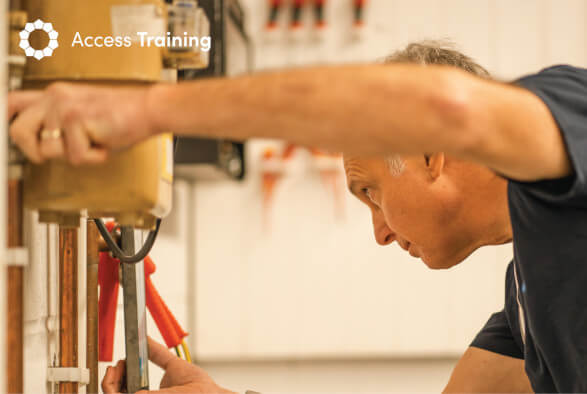
The four month ‘tax amnesty’ that was set up by HM Revenue & Customs (HMRC), where Electricians in the UK owed tax at a greatly reduced rate closed on August 14th.
Under the Electricians Tax Safe Plan which was launched on February 14th, HMRC permitted a reduced penalty charge of just 10% to electricians who had failed to pay the current levels of tax. The amnesty was for electricians who have been trained on an electrician course while other tradesmen in the UK such as plumbers and decorators still had to face penalties of up to 100%, with criminal investigation possible in the most extreme cases.
The HMRC campaign was for anyone who installs, maintains and tests electrical equipment, systems and appliances and covers all tax owed.
Marian Wilson, head of HMRC Campaigns, said: "Electricians who think they owe tax should get in touch today and get their tax affairs in order, easily and on the best terms.
"If you cannot afford to pay what you owe all at once, don't worry. Depending on your circumstances, you may be able to spread the payments. Once the disclosure closes on 14th August, electricians who have not come forward but are found to have unpaid tax liabilities will face higher penalties, rising to 100% of the tax evaded, or possibly even criminal prosecution.”
The Electricians Tax Safe Plan is the second campaign aimed at tradespeople; the first targeted plumbers and heating engineers and raised an estimated £510m for HMRC.
Considering a change of career? Access will help train you in a variety of trades, with an electrician course that can give you an interesting, competitive job. For a range of flexible thorough trade training courses across the UK contact Access today on 0800 345 7492.
Colleges and further education establishments have been criticised for providing training in areas which have very few real life job prospects. Meanwhile, with an excess of electrician and engineer positions available, colleges have not been encouraging enough students to enrol on electrician courses and their ilk.
This year it has emerged that 94,000 hair and beauty students completed training only to find that there were just 18,000 new jobs available in the sector. Media professionals and personal trainers are facing an identical problem – with thousands of new trainees every year and too few positions available to allow them to begin careers.
Electrician courses undersubscribed
Meanwhile, there are distinct gaps in the types of training which are being taken up. In areas where more newly qualified professionals are required, there simply are not enough students interested to fill the labour gap. Electrician courses, plumbing courses, engineering training and training for environmental work are all undersubscribed. An astonishing 40,000 students trained to fill 72,000 new positions in engineering and building. In the world of construction, 123,000 newly trained alumni had the pick of 275,000 positions.
Further educational focus is misplaced
The LGA (Local Government Association) is furious that educational establishments have not yet managed to find the correct balance to address this issue – especially at a time of high unemployment. According to one spokesman, the problem lies in colleges focussing on exam results and pass rates instead of ultimate job prospects. The drive to attain the best pass rates and secure the highest level of funding can lead colleges to encourage students to undertake easier ‘popular’ courses, like hair and beauty.
Alongside the surplus beauticians and joblessness there is another problem. In an economy where unemployment is rife at least 17% of job vacancies are attributed to skills shortages.
There are so many opportunities for fresh trainees in the trades sector currently, with an estimated 2 jobs available per student. If you’re interested in job security and excellent prospects, talk to Access about enrolling on plumbing, gas and electrician courses today on 0800 345 7492.

It can be difficult deciding which path to take in life. You’ve made the bold decision to retrain, but how do you decide where to go from there?
Currently the UK is experiencing a shortage of ‘Gas Safe’ installers, which means if you do plan on taking the plunge, now is a particularly good time to do so. Skilled workers are in demand by both domestic and commercial customers, so at least you know the work is out there. By choosing the right trades training course you will ensure you are in a strong position to land the jobs in your area.
More...
One thing they don’t teach you during plumber training is how to overcome the plumber stereotypes prevalent in British society. No matter how much plumber training you have undergone, no matter how hard you have worked or how considerate, cost-effective and industrious you are – chances are you’re going to be put in a little box marked “Inconsiderate, over-priced, lazy rip-off merchant’!
A new study has shown that British preconceptions of plumbers are not shifting – in fact they are stagnating. The survey asked homeowners a series of questions to gauge their attitude to those in the plumbing industry. The findings were pretty disappointing – especially in the 21st Century when stereotyping of any kind is out-dated and narrow-minded.
Only one in eight of those polled believed that plumbing training creates highly qualified professionals. Meanwhile, only one in six women said that they viewed plumbers as polite and 15% of respondents said that, yes, they still associated plumbers with an unsightly builders’ bum.
This research might be disheartening, but other facts revealed during the study are actually very good news for those embarking on plumbing training courses. For starters, the vast majority of those asked claimed that they had absolutely no idea how to fix basic plumbing issues in their homes. The need for plumbers, therefore, is great and no matter what preconceptions the public might have of those in the plumbing business, there is plenty of opportunity to change their minds!
If you’d like to be that plumber who challenges stereotypes and offers a great service which is of real value to clients, Access offer the plumbing training necessary to prepare you for a life in the plumbing profession. We offer flexible, thorough plumbing training courses to help you start your journey into a bright future. Call today for more information on 0800 345 7492.
It’s time to say goodbye to knot tying, stamp collecting and campfire building – the Scouts are now chasing down a new generation of badges for their uniforms. From P.R. and plumbing training to electrical rewiring and aeronautics, Scouts “2.0” are now offering awards in hands-on practical life skills which will equip their members for working life, apprenticeships and University.
It appears that it isn’t necessarily scout leaders who are pushing these changes – the numbers of scouts choosing practical awards like plumbing training, compared to the numbers choosing to pursue more traditional badges for activities like angling, are very revealing. There seems to be real drive amongst young scouts to gather skills which will set them in good stead in their adult lives.
Here are a few revealing figures from the latest data:
- 42,888 I.T. badges were awarded to beavers, cubs and scouts in 2011
- 10,750 fire safety badges were awarded to scouts over the last year
- Just 588 caving badges and 962 angling badges were awarded to scouts in the same period
Whilst it’s great to see young people taking control of their own futures, some may feel nostalgic for the days when being a scout was all about fun, wholesome outdoors activities like orienteering, hill walking and camping. Whilst it’s absolutely great to get a head start with your career and really explore your options, there is plenty of time to enrol on plumbing training courses or pursue a career in P.R..
Interestingly, 2011 was also the year in which the number of new female scouts exceeded the male scouts. 4,330 new girl scouts were enrolled last year, compared to 3,796 new boy scouts. It is tempting to see this as a real positive change which could have great consequences for equality and diversity in the once male-dominated trades.
If you’re a little too old for the scouts and want to really make a good start on a plumbing training course, Access Training offer flexible, City & Guilds accredited plumbing training to equip you for a bright future as plumber. If you’d like to learn more about our plumbing training, please browse the rest of the website or call our knowledgeable team on 0800 345 7492 today.

On Thursday the 1st March 2012, Cardiff City Stadium will be hosting an exciting free seminar that will introduce lots of businesses and tradespeople to the Government’s ‘Green Deal’ initiative. This initiative is set to bring a whole host of ecological, environmental and cost benefits to a wide range of tradespeople, including those who have qualified on plumber courses, electrician courses and many more vocational courses.
The Green Deal is likely to bring many fantastic schemes and opportunities to businesses and tradespeople who are prepared to ‘Go Green’. The overall aim of the initiative is to improve energy efficiency and boost savings. From plumber courses to electrician courses, all manner of vocational courses now teach their students to install energy and water saving equipment and how to ensure all work done is performed in an environmentally friendly way. The Green Deal aims to take advantage of these skills which are out there in the workplace in order to save people money and improve the UK’s carbon footprint.
The seminar, which begins at 9am on Thursday and will last for around 3 and a half hours, aims to introduce businesses and tradespeople to the opportunities out there which the Green Deal will open up. Attending will allow those who have taken plumber courses and electrician courses to discover the new directions in which their industries are heading. Attendees will also learn about the possibilities which are likely to open up under the Green Deal initiative as well as the advice, training, support and information out there waiting to be taken advantage of.
The speakers will include spokespeople from companies already involved in the Green sector in a wide range of capacities. If you are looking to discover where your trade fits into a Green future, this is the perfect learning opportunity.
In the meantime, if you are looking for plumber courses or electrical courses which will equip you for the future of your chosen industry, Access Training offer City & Guilds accredited plumber and electrical courses which are both flexible and forward thinking. Call 0800 345 7492 today to speak to one of our friendly advisers.
The recent, tragic death of two-year-old Kristiana Logina after she was scalded by a too-hot shower has prompted calls across the plumbing industry to ensure plumber courses teach students to properly recommend and fit TMVs (Thermostatic Mixing Valves). Many people believe that refresher plumber courses should be given to ensure those who enrolled on plumber courses many years ago have up-to-date knowledge to help them regulate bath and shower temperatures using current equipment.
According to statistics, more than 50 UK citizens have been killed by scalding in the past 5 years. Sadly, the victims of these terrible events tend to be the most vulnerable: the young, the elderly and the disabled. Figures show that, in the same time frame, 800 others have been severely injured and scarred by scalding.
These numbers make upsetting reading, especially since these accidents are all too avoidable in this day and age. Anyone who has recently taken plumber courses ought to know how to regulate water temperature using TMVs and all plumber courses should now be advising the installation of TMVs to all clients in line with the new Bathroom Academy guidelines. Anyone embarking on plumber courses will now be made aware that 2010 Building Regulations Approved Document G requires the installation of a TMV in all new bath installations.
Unfortunately these recent rules do not require TMV installations for showers and many industry experts believe that this needs to change and become law too.
If you want to learn more about TMV installation, or want to refresh your plumbing skillset, Access Training offer thorough plumber courses which make sure their students have all the up-to-date-industry knowledge to ensure the safety of their future clients.
According to Yvonne Orgill, Chief Executive of the Bathroom Manufacturers Association: “There is no excuse” for such tragic and avoidable accidents to occur. So ensure you have all the necessary plumber courses under your belt to work safely and to the best of your abilities.
Put the spark back into your career; Part P electrician courses are a fantastic way to add electrical work to your toolkit. Whether you’re a plumber, gas engineer, builder or landscape gardener by trade, Part P electrician courses can quickly qualify you to provide electrical work as part of your service. You’ll need to have completed Part P electrician courses if you intend to do electrical work in any of the following:
• Domestic areas (houses, apartments, flats etc.)
• Combined domestic and commercial areas (pubs, shops etc.)
• Common access areas and shared amenities in flats (excluding lifts)
• Outbuildings (sheds, garages etc.)
• Gardens
• Extensions and loft conversions
Of course, without taking Part P electrician courses you can do electrical work but, after you’ve completed it, you’ll need to notify Building Control, organise an inspection and have your work tested and certified. This could cost hundreds of pounds. Meanwhile, if you’re a tradesperson, Part P electrician courses can be claimed against your tax, rendering them free in many cases.
Part P electrician courses can really expand your horizons, and your bank balance! Many jobs that tradespeople carry out in domestic and commercial properties will involve the use of an electrician and, if you’re qualified to carry out electrical work yourself, you’ll be able to make a profit for yourself and a saving (of both time and money) for your client.
The Part P electrician courses offered by our experts at Access will equip you, in just two weeks, to safely and competently handle a number of common electrical repairs and installations. Whether you’re a plumber installing an electrical shower, or a landscape gardener looking to set up garden heaters or lighters, our Part P electrician courses can help you do just that, without the need for an electrician.

Earn more, save time and money and expand your business. Explore our Part P electrician courses today. For more information visit our Part P Course page or call 0800 345 7492 today.
If you are looking to leave the army and start a new career, you’ll need a whole new skill set. You’ll probably have heard about ELCs (Enhanced Learning Credits), IRTC grants (Individual Resettlement Training Cost), GRT (Graduated Resettlement Time) and a whole host of other three letter acronyms. But what does it all mean and how can you use all of these resources to start a new career and a new life after leaving the armed services?
Over the next few weeks we’ll be looking at retraining in trades for ex-services personnel, so keep your eyes peeled for our blogs and articles aimed at getting you the best training and making the most of the excellent retraining resources the army supplies. In this article we’ll be looking at exactly what ELCs, IRTC grants and GRT are and how you can use them to learn a trade in preparation for your civilian life.
What are Enhanced Learning Credits (ELCs)?
ELCs or Enhanced Learning Credits are a form of financial support for servicemen and women who want to take up further education or retrain in a new profession when they leave the army. Here are the key things you need to know about ELCs:
1. ELCs are available for three separate years; these years do not have to be consecutive and can be used at any point in the decade after you have left the army.
2. There are two levels of ELCs. The lower level entitles you to £1,000 per year, which can be claimed after four years of service. The higher level entitles you to £2,000 per year and is available after eight years of service.
3. All courses your ELCs are spent on must be delivered by an authorised provider and must be a nationally recognised level 3 qualification or above. This may include but is not limited to:
• Overseas qualifications
• Postgraduate qualifications
• Foundation degrees
• Vocational training
• Other academic qualifications
4. ELCs cannot be used to pay for books and materials, travel, accommodation and food required during the training. However, IRTC grants can be used for these purposes and can be used at the same time as your ELCs. Read more about this below.
What are Individual Resettlement Training Cost (IRTC) Grants?
IRTCs or Individual Resettlement Training Costs are another form of financial support for ex-army personnel who want to retrain or get back into education after six years of service. Many people do not realise that IRTCs can be used at the same time as ELCs, but in fact this is a very good way of making the most of your allowances and resources.
IRTC grants are tax-free and entitle you to £534 to be spent on an approved course. A further benefit of £80 a day can be provided to be spent on accommodation and an added £25 can be given to spend on daily food requirements.
Because the yearly £1,000-£2,000 ELCs (Enhanced Learning Credits) are not always enough to cover the cost of a quality, nationally approved training course, many training providers will provide both food and accommodation along with the one-off £534, and use the surplus accommodation and food allowances to cover the rest of the courses cost. This makes great training courses affordable for ex-servicemen and women and keeps them fed and housed for the duration too.
This combination of ELCs and IRTCs is not handled by all training providers but there are a number of excellent vocational training providers, Access included, who are highly-rated by the army because they do a brilliant job of retraining ex-army personnel in this way.
What is Graduated Resettlement Time (GRT)?
Graduated Resettlement Time (GRT) is leave allowance given to army personnel which they can use to prepare for life outside the army. Depending on your years of service, you will be entitled to a different number of GRT days.
No GRT is allotted to military personnel who have been serving for less than six years. After six years the time allotted is as follows:
| Years of Service1 |
GRT Days Allotted |
| 6+ Years |
20 Days |
| 8+ Years |
25 Days |
| 12+ Years |
30 Days |
| 16+ Years |
35 Days |
If you have to leave the army on medical discharge your GRT days are more generous and start from your very first year of service.
So What’s Next?
Now you know the basics about how the key army resources for retraining can fit together, you now need to decide what you want to do and put all this information into practice. Many ex-servicemen and women take up a trade after leaving the army; to do this you will need to train in your chosen field. Access is a vocational training provider with close links to the services. We allow you to use your ELCs and IRTCs to their full advantage whilst the flexibility of our courses allows you to use your GRT to learn in tandem with your current career.
To learn more about the huge range of vocational courses that Access provide for servicemen and women, visit the rest of our website or call one of our experienced and knowledgeable team on 0800 345 7492 today, and take the first step on your brand new career ladder!