Choosing a trade to specialise in is a big decision, and getting it right can be the start of a successful and rewarding career.
If you're looking at electrical, plumbing, and gas engineering courses without having worked in any of those trades before, how do you know which one you’ll enjoy? You might want to work with your hands and feel proud of what you've achieved, or perhaps you've always fancied being your own boss. There's also the question of how much you could earn.
To help you decide, let's dive into what working in each trade looks like on a daily basis, how the earnings for each compare, and the qualifications you'll need to earn along the way.
What's the difference between electrical, plumbing, and gas engineering?
Although there's some crossover between the three trades (particularly when it comes to heating systems) the work involved can be quite different.
Electrical work
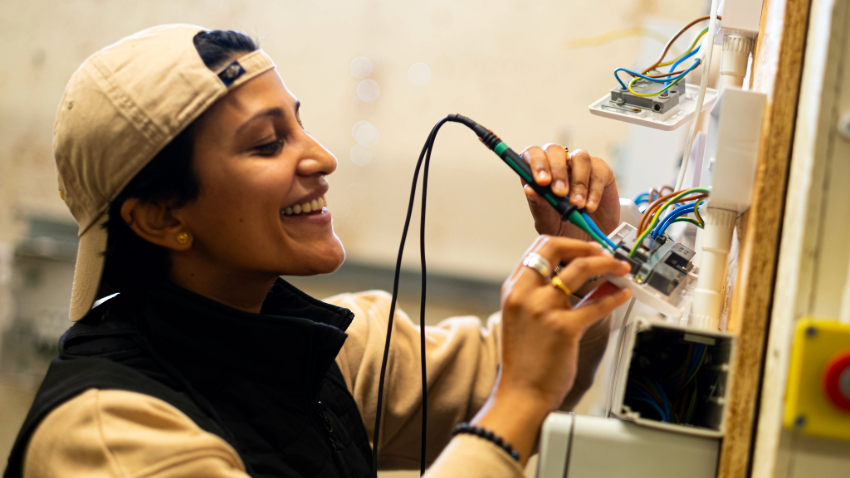
Electricians work with the wiring, circuits, and electrical systems that keep our homes and workplaces running smoothly.
One day you could be installing new wiring in a property that's being renovated, and the next you’re testing electrical installations, tracking down a fault, or working with a wider team on a larger-scale commercial project.
There's plenty of hands-on work involved, but you'll also need to enjoy getting into the technical details. Reading wiring diagrams, understanding how circuits function, and figuring out why something isn't working are all part of the job.
Plumbing work
Plumbers install, maintain, and repair the pipework and systems that supply clean water and carry wastewater away safely.
Fitting a new bathroom can take plenty of hard work, but there's something really satisfying about finally standing back and admiring the finished result. Plumbing has its save-the-day moments too, like when someone calls you in a panic because water's suddenly started coming through their ceiling. That means you’ll need to have the technical knowledge, the right tools, and a calm head under pressure.
The work itself can be quite physically demanding, and you might find yourself working in some awkward spaces that require good core strength or flexibility. Also, because you’re often working in people’s homes, you’ll get to meet and chat with many different customers in all sorts of different locations.
Gas engineering
Gas engineers are trusted to work with boilers, heating systems, and other gas appliances, carrying out installations, servicing, safety checks, and repairs.
The job also involves a lot of detective work. You’ll need a solid understanding of how all the different parts of a heating system work together so you can correctly diagnose an issue and fix it. And, because gas systems can be very dangerous if not handled correctly, there are a lot of strict safety processes and procedures to follow - there’s no room for cutting corners!
Some days might be filled with planned servicing appointments, while others could involve investigating a boiler that's packed up just as the cold weather arrives. If you enjoy getting your head around how things work and like the idea of developing specialist technical skills, gas engineering could be the right career path for you.
How much do electricians, plumbers, and gas engineers earn?
Let's talk about the money. It's probably one of the first things you'll want to know when considering a new career, especially if you're planning to leave your current job or invest in training.
If you asked an electrician, a plumber, and a gas engineer which trade pays the best, you’ll probably get three very different answers - so what do the actual figures tell us?
According to the National Careers Service, here's what you could expect to earn in each trade:
| Trade | Starting salary | Experienced salary |
|---|---|---|
| Electrician | £26,000 | £45,000 |
| Plumber | £24,000 | £46,000 |
| Gas engineer | £25,000 | £45,000 |
*These figures are based on the National Careers Service profiles for electricians, plumbers, and gas engineers.
These are indicative starting and experienced salaries rather than national averages, and the amount you will actually earn depends on your location, working hours, and the specific jobs you take on.
You can also choose to go down the self-employed route. While this gives you a lot more control over the jobs you accept and how much you charge, the costs of running your own business will impact the amount of money that ends up in your pocket once work is completed.
Of course, earning a decent living matters, but given the similar earning potential across all three trades, the choice really comes down to which job sounds like something you would enjoy getting up for every morning.
What training and qualifications does each trade require?
The good news is that you don't need any previous trade experience to start training for electrical, plumbing, or gas engineering work.
Each trade has its own route to becoming qualified, and completing your initial training doesn't necessarily mean you're ready to work independently.
Electrical qualifications
Electrical training starts with getting to grips with circuits, wiring regulations, and safe installation practices.
If you want to become a fully qualified installation electrician, you can work towards the Level 3 Electrotechnical Qualification. This involves demonstrating your skills through real workplace experience and completing the required theory and practical assessments.
Once you've met the relevant industry requirements, you can apply for an ECS Gold Card, which demonstrates your qualifications and occupational competence as an electrician.
Further down the line, you could expand your offering by developing specialist skills in areas like inspection and testing, solar panel installations, or EV charging (after completing the appropriate additional training).
Plumbing qualifications
For plumbing, the Level 2 Diploma is a common starting point. You'll learn the fundamentals of domestic plumbing, including working with pipework, water systems, and bathroom installations.
To become a fully qualified plumber, you can then work towards the Level 2 NVQ Diploma in Plumbing and Heating. This involves putting your skills into practice on real jobs and demonstrating that you can carry out the work competently.
Once you've met the relevant requirements, you can also apply for your JIB-PMES CSCS Plumber Blue Card, which shows employers and site managers that you're qualified to work as a plumber on construction sites.
There's room to specialise as you gain experience, too, whether that's working with unvented hot water systems, bathroom installations, or renewable heating technologies like heat pumps. Additional training and certification may be needed depending on the work.
Gas engineering qualifications
Gas engineering follows a slightly different route, with strict safety requirements and a legal registration process.
Typically, you'll work towards a Level 3 Diploma in Gas Engineering, developing your technical knowledge and practical skills before gaining supervised workplace experience.
Once you've completed the qualification and met the relevant assessment requirements, you can apply to join the Gas Safe Register. You'll need to be registered before legally carrying out gas work, and your registration must cover the specific appliances and systems you work on.
And, if you decide to expand your skills later on, you could train to work on larger commercial heating systems in places like offices or schools, or develop your expertise in new low-carbon technologies like heat pumps.
Ready to start a new career?
Perhaps you're researching your first career, or you've spent years doing something else and want a fresh start. You might even have your sights set on running your own business one day. Whatever your ambitions, if one of these trades has caught your interest, why not see where it could take you?
At Access Training, you can learn the theory online before getting stuck into practical training with friendly, experienced tutors at one of our training centres. Explore our courses below to see what's involved and take that first step towards making your plans for the future a reality.
Still unsure which trade is right for you?
Whether you're worried about cost, fitting training around your current job, or starting without any experience, you can talk it all through with one of our course advisors.
They're here to listen, answer your questions, and help you figure out what comes next so you can find your happy.
PAGE UPDATED 15 OCTOBER 2026