Attend an Electrical Course – Accredited Electrical Courses from Access Training
Access Training’s
comprehensive electrical courses are aimed at
non-electrical and electrical trade personnel of any age or background. Whether you want to attend an electrical course to
start a new career and become a Fully Qualified Electrician, become a Domestic Electrical Installer following a specialist electrical course, you want to know how to
become an electrician and which electrical course is the one for you, learn a new trade skill or simply want to attend an electrical course and get the latest updates, we have a range of electrical courses to suit you or can simply provide you with the
professional advice and guidance you need.
Why choose Access Training for your Electrical Course?
Access Training is one of the UK’s preferred providers of electrical courses. Reasons why you should train on an electrical course with us include:
- Our electrical courses fit around your personal circumstances. You tell us when you can attend and what you want to achieve and we will tailor the electrical course around you. This isn’t something you are likely to find with any other training provider.
- Our electrical courses are fully accredited, meaning you get a City & Guilds qualification
- On your electrical course you will be taught, virtually one-to-one by expert tutors. Our team is made up of some of the most experienced people in the electrical training business teaching electrical courses.
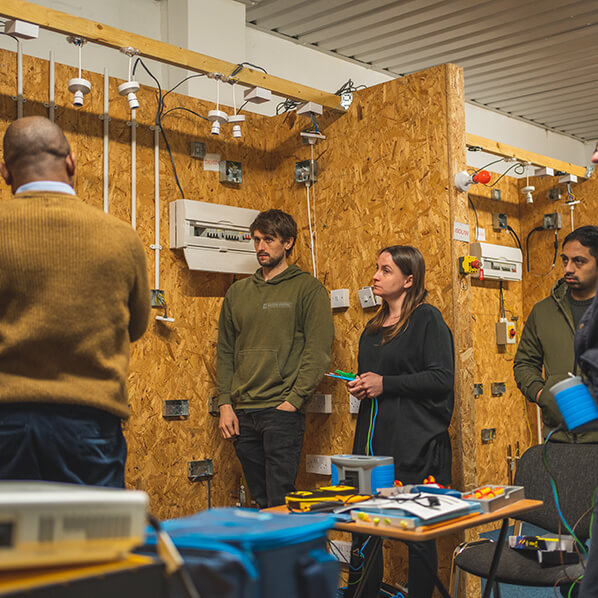
- You will benefit from being in a purpose built, state of the art electrical courses training facility
The aim of each electrical course is to provide you with the skill level and competence which will
allow you to work safely and efficiently when carrying out work on electrical installations, equipment and systems.
We guarantee that during the electrical courses you will learn a whole manner of things, from using various testing equipment to rewiring a house.
You will be given the electrical skills and qualifications you need on your electrical course to get into the industry and develop your career.
View Electrical Workshop Gallery
Our Most Popular Electrical Courses
We have designed a range of electrical courses to suit each individuals needs. Whether your priority is based on your budget, the best qualifications available, the electrical course best suited to your current commitments, or if you want to change your career in the quickest way possibly that above all helps you to achieve your ambitions, then we almost certainly have the electrical course you need. Below are 3 of our most popular electrical courses, they are well worth your time taking a look over. Call us for more information about our electrical courses and how we can help you:
If you want an electrical course that will train and qualify you to
complete Domestic, Commercial & Industrial Electrical Installations including, house re-wires, install power showers, kitchen circuits and get ‘Part P Qualified’, then this electrical course will be of interest to you. You will be able to self certify your own work and
install Solar PV Systems after completed one of these electrical courses. Attend the course Part - Time as it’s a flexible package; train around your current job or lifestyle then
directly join the NICEIC Competent Person Scheme. Click on the link and find out if this electrical course is for you.
If you are looking to gain
‘Part P Qualified’ Electrician status then this is the electrical course for you. It’s suitable for each and every one including complete beginners and anyone wishing to change career. As an example, the electrical course contains
comprehensive training on electrical test meters and how to
identify faults and correct them through fault finding procedures within domestic dwellings. Click on the link to find out more about this electrical course.
This is a comprehensive, all encompassing electrical course. If you want to
Commission and Install Solar PV Systems after this electrical course and achieve the status of a Solar Panel Installer, gain the Domestic Electrical Installer Certificate, City & Guilds 2392 Fundamental Inspection & Testing and the City & Guilds 2391 Inspection & Testing qualification then call us today for further information on this electrical course on 0800 345 7492.
Flexible, intensive electrical courses
By attending an electrical course with us you can be reaping the benefits of a career in the electrical industry. All of our electrical courses lead to you getting the professional qualifications you need in just a matter of weeks (including City & Guilds and EAL). Traditionally you would need to wait 2 or 3 years to start your career by enrolling on a lengthy and inflexible electrical course at a college. However, we can cater for your individual needs by getting you onto an electrical course and get you qualified in just weeks.
Who are these electrical courses for?
These electrical courses are ideal for people wishing to change career, new entrants and trades people from other sectors who want to gain work or self employment in the domestic electrical industry.
For more detail regarding each electrical course please browse the electrical courses on the main menu. However as a summary of our electrical courses...
- Our record of successfully qualified students is second to none, we have been providing electrical courses to electricians for many years and we are rightly proud of our training methods our unique facilities and of our teaching standards.
- State of the art facilities that provide a learning environment that is as realistic as is on all our electrical courses.
- All of our electrical courses are extensively resourced and include all the practical ‘hands-on’ training that you will need to progress onto industry standard qualifications.
- All our larger electrical courses are designed for the student to join a Competent Scheme which will register you as being someone who is qualified, safe and proficient in their electrical work. For example, the NICIEC.
- On every electrical course we have developed over the years a proven track record of success using a blended learning method that balances the theory you need to learn in the comfort of your own home and intensive training in the classroom together with hands on practical training that needs supervision and support from an experienced qualified tutor at our purpose built, fully equipped facility for all our electrical courses.
- Only basic foundation work is studied at home during your electrical course, however as we do not believe and would never advocate that a successful student can learn all they need to know and become competent without specialist intensive onsite training. All of this takes place whilst on the electrical courses at our facility.
- Our electrical courses are full and part time and are structured around your current work and lifestyle.
- We also run bespoke electrical courses that are requested by clients or large companies that may only need specific update training or part of an electrical course delivering. Please contact our training manager to discuss your exact requirements.
- Small class sizes on our electrical courses mean a much greater learning experience for the student. Class sizes are limited in numbers ensuring that each student gets the guidance and training required from their appointed tutor. This ensures that our pass rates are second to none.
Are you already a Practising Electrician?
If you are looking for further electrical training or need to get a specific qualification then please contact us with your requirements. We have a range of electrical courses that are specifically designed for Practicing Electricians that are competitively priced. We offer bespoke electrical courses and training solutions to electrical and commercial organisations of any size, from small individual contractors to large enterprises such as Councils and Electrical Contractors.
What work can I typically do after completing one of the electrical courses?
After finishing your electrical course you will be a qualified electrician and you will be able to safely install and certify the full range of domestic electrical work, including:
- House Re-wires
- Installing Ring Mains (sockets, fuse spurs etc)
- Installing Radial Circuits (showers etc)
- Installing Lighting Circuits (in kitchens, bathrooms, etc)
- Repair and Maintenance of electrical circuits
- Issue Landlord Certificates
- Exchange or Update Consumer Units
- Undertake Portable Appliance Testing of various appliances (optional)
Rest assured you will have attended the correct electrical course, right level of training, gained the best qualifications available and relevant experience to register with the relevant approval bodies, such as the NICEIC; start your career straight after your electrical course.
What if I have no experience of electrics and I’m not used to studying?
Don’t worry. Our electrical courses are aimed at people with little or no electrical experience who are aged between 18 and 80! Whether you have never picked up a screw driver or alternatively have rewired a kitchen, the electrical courses are tailored to fit around your experience and learning speed.
What if I currently have a job and don’t have time to attend one of the fulltime electrical courses?
We deliver flexible electrical courses so that you are in complete control of when you attend and study to complete the electrical course. Most students have both family and work commitments around which they need to fit their electrical course. This works well for students as they do not have to give up their job until they have the confidence and skills to move into the industry when they are ready to.
Do I need to study during the electrical courses?
You can do the small amount of theory at home when you have time during your electrical course, maybe in the evenings or at weekends, and you may decide to take some time off work to fit in the practical electrical training sessions of the electrical course. The practical sessions are broken down into a number of weeklong blocks forming our electrical courses, which will be spent at one of our training centres.
What will I be doing during the practical sessions during the electrical courses?
During the practical sessions of the electrical courses you will put into practice what you have been studying in the theory and actually see the end result of your hard work. As most previous students on our electrical courses will tell you, the learning curve is steep and you will be very surprised how much you learn in a short space of time. As we’ve indicated before, the electrical courses take the blended learning approach to your development. This is a mix of theory that you do at home in your own time and practical hands-on training that you do at one of our training facilities during your electrical course. You can book your practical training sessions when it suits your schedule, you tell us when you would like to attend as our electrical courses are entirely flexible.
What is the EAL Domestic Electrical Installer (Part P) qualification part of the electrical courses allow me to do?
Since January 2005, fixed electrical installations in dwellings have to have been suitably designed, installed, inspected and tested so as to provide reasonable protection against them becoming a source of a fire or a cause of injury to persons. The requirement applies only to fixed electrical installations in dwellings in England and Wales intended to operate at low voltage or extra-low voltage. Hence it forms a vital part of our electrical courses.
Why do I need to attend electrical courses that include Part P training?
Taking the Part P electrical course and gaining the qualification will allow you to work on all fixed installations connected after the supplier's meter in buildings or parts of buildings.
These areas covered on our Part electrical courses include:
- Electrical work in dwellings (houses, flats, apartments etc) i.e. re-wires, installation of kitchen lighting, power showers, moving sockets.
- Combined dwellings and business premises having a common supply (such as shops, pubs etc)
- Common access areas in blocks of flats (but not lifts).
- Shared amenities in blocks of flats (such as laundries, gymnasiums etc).
- Outbuildings, including sheds, garages and greenhouses.
- Garden lighting and power supplies (including spas, security lighting etc).
- Parts of fixed electrical installations external to premises, such as in gardens, (sheds, detached garages etc).
- Extensions and loft conversions (The safety requirement will be applicable to alterations and additions to existing installations, including rewires, as well as to the new construction. This requirement for consequential remedial work is a departure from the normal Building Regulations approach.)
Where would I find further information on Part P electrical courses and Part P training?
Official guidance on complying with the requirement is given in an Approved Document P entitled “Fixed Electrical Installations in Dwellings”. This document specifies the need for electrical installation work to be inspected and tested during and on completion of the work to verify that it complies with BS 7671.
The electrical courses and training has been developed with plumbers and heating engineers in mind. Our Part P electrical courses are suitable for Builders, Plumbers, Heating Engineers, Kitchen Fitters, Alarm Installers, Loft Conversion Companies, Landscape Gardeners, Electric Garage Door Fitters plus anyone else carrying out domestic installation work. Always remember that Part P applies to all domestic fixed electrical installations!
Why is it important for other trades people to attend electrical courses, get ‘Part P’ training and the Domestic Electrical Installer qualification?
As we’ve mentioned before, if you don’t attend an electrical course and have this qualification you will need to notify Building Control directly, who then send out an inspector to inspect, test and certificate the installation (a significant additional charge will be incurred for this service, costing hundreds of pounds).
However, if you under take Part P training on one of our electrical courses and gain your Part P qualification you can become a member of a Competent Persons Scheme - this scheme will then allow the operative to self-certify their work and the scheme provider will notify the Building Control department on the operative’s behalf - no further visits or costs will be incurred from Building Control.
The NICEIC who are approved by the Department of Communities and Local Government to run Competent Persons Schemes have fully approved our electrical courses and the EAL electrical qualification as meeting the requirements to enable an operative to join their scheme.
What does the Introduction to Essential Electrics part of the electrical courses include?
You will start most of our electrical courses by looking at the basics of electricity; your instructor will be teaching you all about basic electrical theory and will continue to do so throughout the electrical course. The first elements to cover are electrical safety and safe isolation, so that you can ensure at all times that you are working in safety. The electrical courses practical demonstrations will also show you the safe use of basic hand tools, power tools, and cable stripping.
This introduction is designed to make you familiar with the common tools that you will use in electrical installation work and whist on our electrical courses.
Other areas covered in this electrical course are:
- Ohm’s Law
- Electrical safety
- Protective devices
- Lighting circuits including 1-way, 2-way, and intermediate switching
What is the City & Guilds 2382 - 17th Edition Certificate and why is it included in our electrical courses?
The crucial element in our electrical courses is 17th Edition electrical course and is designed to enable participants to gain familiarity with the layout, content and use of the 17th Edition Wiring Regulations. It is aimed at anyone involved in the design, construction and inspection and testing of electrical systems. The 2382 is a nationally recognised minimum qualification for most companies seeking to recruit electrical craftsmen and is therefore necessary for inclusion in nearly all of our electrical courses.
You will be given sufficient preparation and example questions to achieve this certificate during this electrical course.
What is the City & Guilds 2377 Portable Appliance Testing qualification (PAT) and why do I need both parts 1 and 2 as part of my electrical course?
Forming part of some of our electrical courses, this qualification is required to inspect and test electrical equipment. Importantly, it also includes the management of PAT and is covered in two days of ‘practical’ workshops. It is part of some of our electrical courses and is aimed at anyone involved in the inspection and testing of electrical equipment and covers everything necessary to successfully achieve the two City & Guilds examinations. You will take these exams on-line after completion of the electrical course instruction with certification awarded to successful candidates and issued by City & Guilds.
What are the City & Guilds 2392 – Fundamental Inspection & Testing of Electrical Installations part of the electrical courses for?
This qualification is included in most of our electrical courses as it was developed to provide candidates with an introduction of how to inspect and test (conduct the initial verification) of electrical installations. It is aimed at electricians new to the industry i.e those attending many of our electrical courses, and focuses on the skills required to test, inspect and certify your own work. It is also ideal for existing electricians who require some update training through one of shorter electrical courses before going on to achieve the City & Guilds Level 3 Certificate in inspection, testing and certification of electrical installations (2391)
A Level 2 qualification, it is the ideal partner to the EAL Domestic Electrical Installer (Part P) qualification.
What is the City & Guilds 2391 Inspection & Testing Electrical Course?
This is one of our Level 3 electrical courses, and is the natural progression from the C&G 2392. It is aimed at those with considerable experience in Inspection & Testing or those who have attended previous electrical courses, and focuses on the additional skills required to test and inspect other people’s work and existing installations across the domestic, commercial and industrial sectors.
Our C&G 2391 electrical courses qualify you as a Duty Holder, and are able to complete Periodic Inspection Reports for clients such as Landlords, Local Authorities, Insurance Companies and Estate Agents.
I’m unsure which electrical course is best for me?
Speak to one of our experienced advisors about our range of electrical courses. They are available at your convenience and will fully explain each of electrical courses in detail and our facilities, they will ask you about your ambitions, introduce the benefits of working within the Electrical Industry, discuss what you would like to achieve after your electrical course, guide you towards the electrical course that is right for you and, most importantly, advise you if any of our electrical courses will suit you.
They can also discuss your accommodation needs should you be interested in attending an electrical course with us and they will also identify relevant funding options for your circumstances.
Call the Electrical Course Admissions Team for further information for free on 0800 345 7492 or click here to send us an email.
So why choose construction training and an electrical course?
There really has never been a better time to attend an electrical course and re-train and become a qualified electrician and enter this lucrative and rewarding industry. The demand for qualified electricians to work on both domestic and commercial properties providing the public with safe and correct electrical installations (that are legally compliant) is in great need across the country. Attend an electrical course and take up a career as an electrician can be very rewarding as most of our students go on to form profitable careers. But it will only become rewarding if you choose the right electrical course in the first place. There are many electrical courses available, so call us for some straight advice about choosing the right one. This decision is very important and one you should not make lightly.
There are various reasons for choosing to become an Electrician and enrolling on an electrical course:
- There still remains a huge shortage of qualified Electricians across the country (have you tried to call a one lately? They always seem to be busy!)
- Because of this high demand the levels of pay are high compared to many other sectors.
- You get to work for yourself after your electrical course so you have the choice of the hours you want to work. Especially if you have family commitments as you have the flexibility you need.
- Become your own boss and grow your own business straight after your electrical course.
- Gain the status of a professionally qualified person after completing your electrical course.
- It is one of the few ‘jobs for life’ that are left. Once you are qualified after your electrical course nobody can ever take it away from you, it is a skill and qualification you will have for the rest of your life.
- Its a job that everybody wants, you will set yourself apart from the rest by attending an electrical course and becoming a qualified Electrician.
- You will get a complete sense of job satisfaction that comes with the practical work of this kind. The Electrical profession is rated as one of the happiest occupations for someone to have.
Does attending an electrical course and becoming an Electrician provide Job Security?
The first thing most people want when considering an electrical course for a career change is job security and how the industry fares during harder economic times. Rest assured that that even in an economic down turn the electrical industry has remained stable due to one simple factor; there is a lack of people attending the correct electrical course and entering this trade with the wrong correct qualifications. Call us today and we’ll explain why our electrical courses give you the right qualifications for your future career.
What do Electricians potentially earn after attending an electrical course?
The City & Guilds have stated that the average earnings of an electrician is £29,964 (predicted for next year) which equates to £2497 a month. It has also been quoted that the highest earners are taking home up to £41,727 or £3477 a month, so attend an electrical course today and reap the rewards!
It goes without saying that newly qualified electricians will probably not get to these kinds of figures straight away after attending an electrical course and you will need to gain experience in many areas of the electrical trade before achieving these levels of income. These figures will certainly not be achieved if you become only partly qualified having attended the wrong electrical course and not gained your Inspection and Testing qualification.
Call us to find out more, some of our students are achieving their full qualifications with weeks of electrician training on our specially designed electrical courses. If in the future you find yourself successfully employing a number of other Electricians within your business then this could, of course, produce even higher rewards. Also it is worth noting that if you plan to run a successful electrical business or becoming an Electrical Engineer, you could earn you over £50,000 a year. You can check for yourself if you like via other websites so you can set your own career goals.
Are there types of Electrician and what electrical course do I need?
There are many different types of Electrician but the most commonly known are the Domestic Electrical Installer or Installation Electrician. Electricians perform a wide variety of tasks and services including installation of electrical circuits, house rewires, testing of electrical circuits and issuing safety certificates, but only after attending the correct electrical course. The trade can be very rewarding but this can only be achieved by undertaking the correct electrical course and level of training as choosing the wrong electrical course could only qualify you to perform basic tasks and not provide you with the progression to being a fully qualified Electrician that you want. Call our free advice team and they will tell what the correct route and electrical course is and highlight the differences between our electrical courses further.
We train students on electrical courses from anywhere in the UK
The main areas include:
-
South Wales
(Cardiff, Swansea, Newport, Bridgend)
-
South of England
(Bristol, Gloucester, Bath, Swindon, Oxford, Reading, Slough, London)
-
The Midlands
(Birmingham, Hereford, Worcester, Derby, Nottingham, Leicester)
-
The South West
(Devon, Cornwall, Exeter, Plymouth, Taunton)
Further information
Information regarding our electrical courses are available from our Electrical Course Advice Team. Please call for advice or leave your details and we’ll contact you!